Blossom in Kashmir: Spring Travel Guide to Tulips, Culture, and Valley Life
By: JKL Travels – KashmirTravels | January 2026
Get ready for the Magic of springtime valleys, timeless traditions, and unforgettable journeys
A Season That Changes Everything
Every destination has its best time to visit.
But Kashmir in spring is not just a season—it is a transformation.
As winter loosens its grip on the valley, the snow retreats from gardens and riverbanks, revealing orchards in bloom, meadows in green, and communities stepping back into the rhythm of daily life. From late March through May, Kashmir becomes a living poem—written in blossoms, sunlight, and centuries-old traditions.
This period, widely known as “Blossom in Kashmir,” is when the region shows its most balanced, authentic face. It is neither the harsh silence of winter nor the crowded peak of summer. Instead, it is a time of renewal—both for nature and for the people who call the valley home.
For travelers, spring in Kashmir offers something rare: beauty without excess, access without chaos, and culture without performance.
Also Read | Kashmir More Easy & More Affordable | Delhi–Kashmir–Delhi Rail Tour Packages 2026
Blossom in Kashmir: The Meaning Behind the Season
Spring has deep cultural and ecological significance in Kashmir. Historically, it marked the return of agriculture, trade movement, and community gatherings after months of winter isolation.
Ground reports from horticulture departments confirm that apple, almond, cherry, and apricot blossoms emerge in carefully sequenced cycles across districts such as Budgam, Shopian, Baramulla, and Pulwama. These blossoms are not decorative—they signal the foundation of Kashmir’s rural economy.
“Blossom in Kashmir” therefore represents:
-
Agricultural renewal
-
Economic momentum
-
Cultural revival
-
Tourism reawakening
This layered meaning is what makes the season so emotionally resonant.
Nature’s Grand Performance: When the Valley Blooms
Blooming Orchards: Villages Turn into Landscapes
As temperatures rise gently in March and April, Kashmir’s orchards burst into color. Apple trees, the backbone of the valley’s economy, bloom in soft pinks and whites. Almond blossoms arrive earlier, often in March, painting village lanes and hill slopes with delicate hues.
Travelers passing through these regions often describe the experience as walking through a painting—quiet roads, petals floating in the air, and farmers tending to fields with renewed energy.
Unlike manicured gardens, these orchards offer unfiltered, everyday beauty—the kind that feels intimate and real.
Tulip Garden, Srinagar: Spring’s Most Celebrated Spectacle
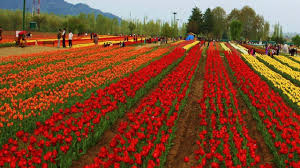
One of the most visible symbols of Blossom in Kashmir is the Indira Gandhi Memorial Tulip Garden in Srinagar.
Recognized as Asia’s largest tulip garden, it opens briefly each year—usually from late March to mid-April—depending on weather conditions. During this short window, over a million tulips bloom in neat terraces against the dramatic backdrop of the Zabarwan hills.
Ground verification confirms:
-
Over 60 varieties of tulips
-
Timed entries to manage crowds
-
Strong tourism department oversight
The garden’s popularity lies not only in its colors, but in its timing—it arrives just as winter fades, offering a powerful visual metaphor for renewal.
Rivers, Meadows, and Snow-Kissed Peaks
Spring also redefines Kashmir’s geography.
-
The Jhelum River flows fuller and clearer, reflecting skies softened by spring light.
-
The Lidder River near Pahalgam regains its sparkle as snowmelt feeds its currents.
-
Meadows in Gulmarg and Sonamarg begin to show green under lingering snow.
This contrast—blossoms below, snow above—is what makes spring photography in Kashmir uniquely compelling.
Also Read | Jammu & Kashmir Travel Guide 2026 – ‘New Year, New Beginning, New Dream’ with JKL Travels
When Culture Comes Alive
Nature may set the stage, but Kashmir’s people give spring its soul.
Wazwan: A Season of Shared Tables
Spring marks the return of gatherings—weddings, community feasts, and family celebrations. At the heart of these events is Wazwan, Kashmir’s iconic multi-course cuisine.
Prepared by skilled wazas (chefs), Wazwan is more than food—it is hospitality in its purest form. Dishes like Rogan Josh, Yakhni, and Gushtaba are prepared with patience, reflecting the slower pace of life that spring restores.
Folk Music, Dance, and Oral Traditions
As evenings grow longer, villages come alive with music.
Traditional instruments like the Rabab and Santoor accompany folk songs passed down through generations. Rouf dance, often performed by women, celebrates joy, fertility, and togetherness—fitting themes for spring.
These are not staged performances for tourists. They are lived traditions, witnessed quietly by those who take the time to observe.
Crafts and Markets: Heritage in Motion
Spring also revives Kashmir’s artisan economy.
Local markets showcase:
-
Hand-woven carpets
-
Pashmina shawls
-
Walnut wood carvings
-
Papier-mâché art
Artisans often describe spring as their most productive season—roads reopen, raw materials arrive, and buyers return. For travelers, this is the best time to engage directly with craftspeople and understand the stories behind the work.
Also Read | Valentine in Kashmir: Romantic Shikara Rides, Snow Escapes & Honeymoon Packages
The Modern Magic: Kashmir in the Digital Age
While deeply traditional, springtime Kashmir is not frozen in the past.
Event Tourism and Celebrations
Destination weddings, cultural festivals, and curated experiences are increasingly common during spring. These events blend heritage with modern planning, offering immersive yet respectful tourism.
Social Media and Storytelling
Spring visuals from Kashmir—blossoms, rivers, gardens—travel fast on digital platforms. Instagram reels, travel documentaries, and photo essays have played a major role in reshaping perceptions of the region.
Importantly, many of these stories come from locals themselves, offering authenticity rather than spectacle.
Adventure with Balance
Spring also marks the return of outdoor activity:
-
Low-altitude treks reopen
-
Skiing continues in higher reaches of Gulmarg
-
Paragliding resumes in select zones
Unlike peak summer, spring adventure is gentler—better suited for beginners and families.
Why Visit Kashmir in Spring?
Better Accessibility
Mountain passes reopen, flights stabilize, and road connectivity improves significantly after winter. This makes spring one of the most logistically reliable seasons to travel.
More Affordable Than Summer
Compared to June and July, spring offers:
-
Lower hotel tariffs
-
Better availability
-
More flexible itineraries
This affordability does not mean compromise—it means value.
Authenticity Without Crowds
Perhaps the greatest advantage of Blossom in Kashmir is space.
Fewer crowds allow deeper interactions—with landscapes, locals, and culture. For many travelers, this is when Kashmir feels most itself.
Blossom in Kashmir: A Responsible Way to Travel
Ground reports from tourism and environmental agencies emphasize the importance of sustainable spring travel:
-
Respect orchards and private land
-
Avoid littering near rivers and gardens
-
Support local businesses
Spring is fragile. Responsible tourism ensures it remains magical.
Nature’s Grand Performance
- Blooming orchards: Apple and almond trees burst into pink and white blossoms, turning villages into fairytale landscapes.
- Tulip gardens: Asia’s largest tulip garden in Srinagar opens its gates, offering a riot of colors against the backdrop of the Zabarwan hills.
- Crystal rivers: The Jhelum and Lidder flow with renewed vigor, reflecting the brilliance of spring skies.
- Snow‑kissed peaks: Gulmarg and Sonamarg retain their snowy charm, offering both adventure and serenity.
Culture Comes Alive
Spring in Kashmir is not only about nature — it’s about people, traditions, and celebrations.
- Wazwan feasts: Families gather to share the iconic multi‑course Kashmiri meal, a symbol of hospitality and heritage.
- Folk music & dance: Rabab tunes and Rouf performances echo through villages, blending joy with cultural pride.
- Crafts & markets: Local artisans showcase hand‑woven carpets, pashmina shawls, and papier‑mâché art, keeping centuries‑old traditions alive.
The Modern Magic
- Event tourism: Weddings, festivals, and curated experiences are increasingly blending tradition with modern spectacle.
- Social media moments: Instagram reels and cinematic videos capture the valley’s beauty, turning every traveler into a storyteller.
- Adventure seekers: Trekking, skiing, and paragliding add thrill to the natural charm, attracting younger generations.
Also Read | Valentine in Kashmir with JKL Travels: Romantic Shikara Rides, Snow Escapes & Honeymoon Packages
Why Kashmir in Spring?
- Accessibility: Roads reopen after winter, making remote valleys easier to reach.
- Affordability: Compared to peak summer, spring offers more budget‑friendly travel options.
- Authenticity: Fewer crowds mean deeper connections with locals and culture.
Takeaway: Where Nature, Culture, and People Meet
Blossom in Kashmir is more than a seasonal slogan — it is a reminder that magic exists where nature, culture, and people meet. To walk through blooming orchards, to taste the richness of wazwan, to hear folk songs under starlit skies — this is the Kashmir experience.
So, get ready. The magic is waiting.
Blossom in Kashmir is not a marketing phrase.
It is a lived reality.
It is the quiet joy of walking through flowering orchards.
The warmth of sharing a traditional meal.
The sound of folk songs carried on evening air.
In a world moving too fast, spring in Kashmir reminds us that beauty still unfolds slowly.
So when the valley blooms, be ready—not just to visit, but to experience.
Because the magic is real. And it is waiting.