Amarnath Yatra 2026: No Helicopters, a Brand-New Train, and the Most Sacred Walk in the Himalayas
By: JKL Travels – KashmirTravels | June 2026
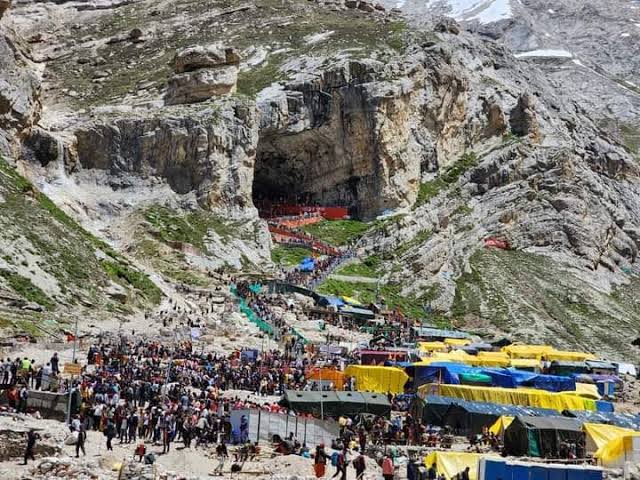
There is a cave in the Kashmir Himalayas, tucked 3,888 metres above the world, where winter keeps its secrets. Every summer, when the snow retreats just far enough, millions of people — young and old, from every corner of India and beyond — make their way up the mountain to stand before a naturally formed pillar of ice and feel something that no photograph has ever quite managed to capture.
This is the Amarnath Yatra. And in 2026, it is asking a little more of you.
The sky above the yatra corridor is officially closed. No helicopters. No shortcuts. Just the ancient mountain trail, your two legs, a pony if you need one, and 57 days of one of humanity’s most enduring acts of devotion.
Here is everything you need to know — the facts, the changes, the routes, the trains, the costs, and the spirit of a journey that has been drawing pilgrims to Baba Barfani’s door for over a thousand years.
Read This First — The Biggest Change for 2026
The Amarnath Yatra 2026 corridor is a No-Fly Zone.
Under Government Order No. 321-HOME of 2026, issued on 1 June 2026, the J&K administration has officially shut the skies over both yatra routes — Baltal and Pahalgam — for the entire duration of the pilgrimage. All commercial helicopter services are suspended from 1 July 2026 until the yatra concludes on 28 August 2026.
This is not a technical suspension or a temporary weather-related restriction. It is a full ban, in force for the second consecutive year, driven primarily by security concerns following the 2025 Pahalgam terror attack and the need to maintain tight airspace control over the corridor.
The SASB has been unambiguous: the cave shrine can be reached this year only on foot, by pony, by palki (palanquin), or by dandy.
And one more thing — the scam warning: The SASB has specifically alerted pilgrims that websites selling helicopter tickets for Amarnath 2026 are running outright fraud. If you see one, do not pay, do not enter your Aadhaar or bank details, and report it immediately at cybercrime.gov.in.
With that out of the way, let us plan your yatra properly.
Your 2026 Yatra at a Glance — All the Key Facts
| What You Want to Know | The Answer |
|---|---|
| When does the yatra start? | 3 July 2026 |
| When does it end? | 28 August 2026 — Raksha Bandhan |
| How many days? | 57 days |
| First worship (Pratham Puja) | 29 June 2026 — Jyeshtha Purnima |
| How many pilgrims registered so far? | Over 3.5 lakh (5 lakh expected total) |
| Registration fee | ₹150 offline · ₹220 online/group · ~₹1,510–₹1,550 NRI/foreign |
| Where to register | jksasb.nic.in (open since 15 April 2026) |
| Cave altitude | 3,888 m (12,756 ft) |
| Routes to the cave | Baltal (~14 km, steep) and Pahalgam (~46–48 km, gradual) |
| Helicopter status | 🚫 Completely banned — No-Fly Zone |
| How to reach the cave | Walk · pony · palki · dandy — that’s it |
| Nearest airport | Srinagar International (SXR) |
| Nearest railway station | Anantnag (Pahalgam route) · Srinagar (Baltal route) — both on USBRL |
| New train service | Vande Bharat, Jammu Tawi → Srinagar, operational since April 2026 |
| Age limit | 13 to 70 years |
| Daily trekker quota | 7,500 per route (counted separately) |
| Security deployment | 1 lakh+ personnel · 670 CAPF companies — highest in yatra history |
The Dates: July 3 to August 28 — 57 Days to Baba Barfani
When the Yatra Officially Begins
The Shri Amarnathji Shrine Board has set the dates: Amarnath Yatra 2026 opens on 3 July and closes on 28 August, for a total of 57 days. It ends, as tradition dictates, on Raksha Bandhan — the day the Chhari Mubarak, the holy silver mace of Lord Shiva, completes its ceremonial procession from Srinagar and arrives at the cave shrine.
Two days before the public pilgrimage begins, on 29 June 2026 (Jyeshtha Purnima), the season formally opens with the Pratham Puja — the first worship of the year, conducted by priests at the cave shrine.
One correction worth making: Several popular travel blogs have published the 2026 yatra as 62 days. That figure is simply wrong. It is 57 days, as confirmed and notified by the SASB. Check jksasb.nic.in if in doubt.
Picking Your Window — When to Actually Go
Within the 57-day season, timing genuinely matters. Here is an honest read of each phase:
Early July (3rd to 20th) is where most experienced pilgrims aim. The ice Shivling is at its largest and most awe-inspiring, not yet shrunk by the summer heat. Trail conditions are at their best. Morning skies are often clear. Crowds are large but not yet at their absolute peak. If you are doing this for the first time, this is your window.
Late July is when the monsoon asserts itself. Rainfall becomes heavier and harder to predict. Trails get muddier. But the mountain is also more dramatic — clouds swirl around the peaks, waterfalls appear from nowhere, and the entire landscape takes on a deep, brooding beauty.
August, all the way to Raksha Bandhan, is the most spiritually charged stretch. The closer you get to 28 August, the more the air feels electric with devotion. The crowds reach their greatest intensity around Shravan Purnima. The ice Shivling is smaller by this point, but the experience around the cave is something utterly overwhelming.
The No-Fly Zone — What the Helicopter Ban Means for Every Pilgrim
The Official Order in Plain Language
Issued on 1 June 2026, Government Order No. 321-HOME of 2026 declares the entire Amarnath Yatra corridor — both the Pahalgam and Baltal routes, every helipad, every landing zone — a No-Fly Zone from 1 July 2026 until the yatra concludes. The SASB has formally notified all pilgrims accordingly.
Three helipads are now closed for commercial use:
- Neelgrath Helipad (Baltal sector)
- Panchtarni Helipad
- Pahalgam Helipad
The sole exception is bona fide medical emergency evacuation — not a shortcut for anyone, requiring case-by-case government authorisation.
Why Was This Decision Made?
This is the second year running that the yatra corridor has had a No-Fly Zone. In 2025, the ban followed the Pahalgam terror attack and Operation Sindoor. For 2026, the government has extended it as a deliberate precaution, citing three core concerns:
The first is airspace security. Restricting civilian flights gives security agencies clean, uncluttered skies, making it far easier to detect and respond to any drone-based threat — a growing concern on the Line of Control.
The second is helipad crowd management. When commercial helicopter services were running, helipads became significant gathering points — surveillance-intensive and logistically complicated to secure.
The third is simply continuity of caution. There are no specific intelligence inputs suggesting a direct threat in 2026, but the government has chosen not to re-open the airspace until it has greater confidence in the overall security environment.
The Practical Reality for Pilgrims
If you had built your yatra plan around a helicopter ride, start over. Every single pilgrim — from a 14-year-old making the journey for the first time to a 70-year-old completing their tenth — must now reach the cave on foot, by pony, by palki, or by dandy. No VIP exemptions. No backdoors.
This makes three things more critical than ever before in 2026: choosing the right route, preparing your body properly, and booking pony or palki services well in advance.
Registration — How to Get Your Yatra Permit for 2026
Who Is Eligible
All Indian citizens aged between 13 and 70 years, with a valid Compulsory Health Certificate (CHC), may register. Pregnant women are not permitted if the pregnancy has crossed 6 weeks. Foreign nationals and NRIs may register through a separate link on the SASB portal.
How Much Does Registration Cost?
| Pilgrim Category | Fee |
|---|---|
| Indian — offline, at bank branch | ₹150 per person |
| Indian — online or group registration | ₹220 per person |
| NRI / Ex-India pilgrims | ~₹1,510–₹1,550 per person |
| Foreign nationals | ~₹1,550 per person |
Both ₹150 and ₹220 figures appear in official and semi-official sources — the difference appears to be the channel. Offline bank registration is ₹150; online and group registration is ₹220. Verify the current applicable fee at jksasb.nic.in before paying.
Registering Online — Step by Step
The process is clean and takes about 15 minutes if your documents are ready.
Head to jksasb.nic.in or open the official “Shri Amarnathji Yatra” mobile app. Create an account with your mobile number and email. Fill in your details exactly as they appear on your Aadhaar — spellings, date of birth, address. Upload your Aadhaar, a recent passport photograph, and your CHC. Select your route and your intended travel date, then pay and download your Yatra Permit. The permit carries your name, route, date, and a QR code. Print it. Back it up digitally. You will be asked for it at multiple checkpoints.
A word on timing: Daily quotas are 7,500 trekkers per route. Early July dates are filling up fast. Register the day slots open for your preferred date — waiting costs you your window.
Registering Offline — At the Bank
Visit any of the 550+ designated bank branches across India: J&K Bank, State Bank of India, Punjab National Bank, YES Bank, ICICI Bank, or Axis Bank. Carry your CHC, Aadhaar, and four recent passport-size photographs. The offline fee is ₹150. Aadhaar biometric eKYC is done at the counter. The bank officer signs and stamps your permit on the spot.
The Compulsory Health Certificate — Non-Negotiable
The cave sits at 3,888 metres. The Pahalgam route crosses a pass at 4,276 metres — higher than the cave itself. This is not a gentle woodland walk. Every pilgrim, including those who will travel by pony or palki, must carry a CHC issued by an SASB-authorised doctor.
For 2026, the certificate must be dated on or after 8 April 2026. It must carry your photograph, attested by the doctor. The state-wise list of authorised doctors and medical institutions is on jksasb.nic.in. Be honest with your doctor — your safety at altitude depends on that conversation.
The RFID Card — Your Digital Companion on the Trek
Every registered pilgrim must collect an RFID card from designated centres in Jammu or Srinagar and wear it around their neck throughout the yatra. It enables real-time tracking, crowd management, and emergency response coordination.
Without it, you will not pass the access gates at Domail (Baltal route) or Chandanwari (Pahalgam route). There are no exceptions and no workarounds.
New in 2026: Every pony rider, porter, palki operator, and support worker now carries a tamper-proof QR-code identity card — the first time in the yatra’s history. Security personnel and pilgrims can scan it to instantly verify anyone working along the route. A simple but significant security upgrade.
The Two Routes — Choosing the Right Path in 2026
With no helicopter safety net this year, your route choice carries more weight than it ever has. One is short and punishing. The other is long and forgiving. Here is the honest picture.
Side-by-Side Comparison
| Factor | Baltal Route | Pahalgam Route |
|---|---|---|
| One-way distance | ~14 km | ~46–48 km |
| Time on trek | 1–2 days | 3–5 days |
| Physical demand | Very hard — constant steep climb | Moderate — gradual, manageable |
| Pony service | ❌ Not available | ✅ Full service, multiple sectors |
| Palki/Dandy | Dandy (carried chair) only | Full palki and palki service |
| Terrain | Gorges, rocky, exposed | Alpine meadows, glacial lakes, forests |
| Best suited for | Fit trekkers, 18–45 | Everyone else |
| Daily quota | 7,500 trekkers | 7,500 trekkers |
| From Srinagar | ~100 km, ~3 hrs via NH1 | ~90 km, ~2.5–3 hrs |
| Nearest train station | Srinagar (USBRL) | Anantnag (USBRL) |
The Pahalgam Route — Walking the Old Way
The Pahalgam route is the one pilgrims have been walking for centuries. It begins where the bus drops you — at Pahalgam (2,130 m), a pretty hill town in Anantnag district. A shared minibus then carries you the first 16 km to Chandanwari (2,896 m), where the actual trek begins. From there, the mountain takes over.
The trail climbs through Pissu Top’s sharp initial rise, settles into a rhythm through pine forests, and arrives at Sheshnag — a glacial lake sitting at 3,576 m, surrounded by peaks that look like they were placed there by someone who cared very much about composition. This is where most pilgrims spend the first night on the mountain.
Day two on this route is the test. The path climbs to Mahagunas Pass at 4,276 m — the highest point of the entire yatra, and the place where the air becomes noticeably, meaningfully thinner. From the pass, the world opens up in every direction. The descent leads to Panchtarni (3,657 m), the last overnight halt before the cave.
The final push is a short but emotionally overwhelming stretch from Panchtarni through Sangam and up to the cave at 3,888 m.
The Pahalgam Route — Elevation by Stage:
| Waypoint | Elevation | Notes |
|---|---|---|
| Pahalgam | 2,130 m | Town; minibus to Chandanwari |
| Chandanwari | 2,896 m | Trek begins here |
| Pissu Top | ~3,100 m | Sharp early climb, ~2 hrs |
| Sheshnag | 3,576 m | First overnight halt; famous glacial lake |
| Mahagunas Pass | 4,276 m | Highest point on the entire route |
| Panchtarni | 3,657 m | Last overnight halt |
| Sangam | ~3,800 m | Baltal and Pahalgam routes meet here |
| Holy Cave | 3,888 m | Destination |
Who should take Pahalgam: Anyone on their first yatra. Families. Pilgrims aged 50 and above (within the 70-year limit). Anyone travelling with children. Anyone who wants the full, unhurried, layered experience of the yatra — the mountain camps, the lake at night, the gradual approach that feels earned. And in 2026 especially, with no helicopter option, this route’s pony and palki availability makes it essential for anyone who cannot complete the full trek on foot.
The Baltal Route — Fast, Fierce, Unforgiving
Baltal earns its reputation honestly. At ~14 km one-way from the base camp (2,743 m), it sounds manageable — until you actually begin climbing. The ascent is relentless. There is very little flat ground. The trail passes through Domail, Barari Marg, and Sangam before reaching the cave, and the gradient barely lets up the entire way.
On a good day, a fit trekker in their twenties or thirties can reach the cave and return to Baltal before dark — but only with a 3–4 AM start and good weather. August afternoons bring cloud and rain that close visibility quickly. Start late, and you may find yourself descending in the dark.
What you need to know about pony service on Baltal: There is none. Regular pony service does not operate on the Baltal route. The only assisted option is a dandy — a chair carried by four porters. It is available but expensive, physically demanding for the porters on steep terrain, and limited in availability. On Baltal, you either walk or you are carried.
Who should take Baltal: Fit, experienced trekkers who want the cave and back in a single long day. Pilgrims with very limited time (2–3 days total). Those who have done the Pahalgam route before and want a different experience. Not recommended for first-timers, anyone with joint or cardiac issues, or those aged above 60.
Pony, Palki & Pithu — The 2026 Alternatives to the Helicopter
With the helicopter gone, these three services have stepped into the role of the mountain’s great equalisers. They make the Amarnath Yatra possible for people who could never complete it on foot alone.
What Each Service Offers
The pony is the most popular assisted option on the Pahalgam route. Pilgrims ride from Chandanwari through the various stages at a pace the mountain horse has learned over decades. The journey is divided into sectors, with government-notified rates for each. A good pony and an experienced handler can make the difference between a painful trek and a profound one.
The palki is a palanquin — a chair mounted between two horizontal poles and carried by four to six porters. It is the right choice for elderly pilgrims, those with mobility limitations, or anyone whose medical clearance allows the yatra but not extended walking. Available on the Pahalgam route. The general weight limit is 80–90 kg — confirm at the counter before booking.
The dandy is the Baltal route’s equivalent of the palki. Fewer operators, steeper terrain, and a physically gruelling task for the porters — but it is the only assisted option on that route.
The pithu is your porter — the person who carries your bag, your water, your extra layers, and sometimes, on the hardest sections, offers a steadying hand. A reliable pithu is worth every rupee on a multi-day Pahalgam route trek.
How to Hire — and How to Make Sure You’re Not Cheated
All rates for ponies, palkis, dandies, and pithus are officially notified by the J&K Government before the yatra season. The 2026 rate schedule is published on jksasb.nic.in and displayed at all official hiring counters at the base camps.
The rules are simple and worth memorising: always hire from the SASB-registered official counters at Nunwan (Pahalgam) or Baltal. Check the displayed rate card before you agree to anything. Do not negotiate with roadside touts — they are unregistered, their animals are unverified, and you have no recourse if something goes wrong. Report any overcharging to the nearest SASB camp officer.
On peak days — particularly the Shravan Purnima week in late August — ponies and pithus book up by mid-morning. If you are travelling during a high-demand window, book in advance through a registered tour operator.
Getting There — How to Reach Amarnath in 2026
By Train — The Vande Bharat Changes the Entire Journey
The biggest infrastructure development in the history of Amarnath Yatra access happened on 6 June 2025 — the day the Udhampur–Srinagar–Baramulla Rail Link (USBRL) was declared fully operational. For the first time, pilgrims can travel by train all the way from Jammu Tawi to Srinagar — and with the Jammu Tawi extension commissioned in April 2026, the Vande Bharat now runs the full length.
What used to be a 7-hour road journey through winding mountain passes, sometimes closed by weather or convoy restrictions, is now a train ride of under 5 hours — comfortable, weather-independent, and genuinely spectacular.
The route crosses the Chenab Rail Bridge, the world’s highest railway arch bridge, soaring 359 metres above the river. It passes through the Banihal Tunnel — one of the longest in Asia — and crosses the Anji Khad Cable-Stayed Bridge, India’s first. Just the train journey to the yatra is an experience that deserves its own story.
Railway Stations for Amarnath Pilgrims — Updated for 2026
| Station | Why It Matters | Distance to Base Camp |
|---|---|---|
| Anantnag (AINT) | Closest USBRL station to Pahalgam | ~35–40 km to Pahalgam · ~1 hr by taxi |
| Srinagar | Central hub; ideal for both routes | ~90 km Pahalgam · ~100 km Baltal |
| Banihal (BAHL) | Valley-side of Pir Panjal tunnel | ~120 km to Pahalgam |
| Katra (SVDK) | Vaishno Devi gateway | ~250+ km to base camps |
| Jammu Tawi (JAT) | Main national railhead | ~315 km Pahalgam · ~400 km Baltal |
For Pahalgam route pilgrims, Anantnag is the revelation of 2026. It is just 35–40 km from Pahalgam by taxi — about an hour’s drive. Pilgrims who once faced an 8-hour slog from Jammu to Pahalgam can now do it in a comfortable 5-hour train + 1-hour taxi combination.
For Baltal route pilgrims, Srinagar remains the right station — take a taxi or arranged transport from there to Baltal (~100 km, ~2.5–3 hours via NH1).
Vande Bharat Chair Car fares are approximately ₹665–₹715 one-way. Book through IRCTC well in advance. RPF and Government Railway Police provide security coverage on board during the yatra season.
Road Travel — The Time-Window Rules You Must Follow
The J&K Police have imposed mandatory time restrictions on civilian road movement during the yatra period:
No civilian vehicle may leave Jammu for the Valley before 11:30 AM. No vehicle may cross the Banihal–Qazigund tunnel after 3:00 PM. These rules are enforced at checkpoints without exceptions. Build your travel day around these windows.
By Air
Srinagar International Airport (SXR) is well-connected from Delhi, Mumbai, Bengaluru, Hyderabad, Kolkata, and Chandigarh. From the airport, Pahalgam is ~90 km (~2.5–3 hours) and Baltal is ~100 km (~2.5–3 hours via NH1). Book flights at least 6–8 weeks in advance — July fares to Srinagar are at their annual peak during the yatra season.
Security in 2026 — The Most Protected Yatra in Living Memory
The numbers are striking. For Amarnath Yatra 2026, the Ministry of Home Affairs has approved the deployment of 670 CAPF companies — the highest ever for any Amarnath pilgrimage, up from 580 the previous year. Total security personnel across the corridor exceed 1 lakh, covering every transit point from Lakhanpur at the J&K border all the way to the cave shrine.
The Indian Army holds the heights — strategically positioned at elevated posts along both routes, watching the passes and ridgelines. The Vikas Battalion — a newly raised Army unit trained specifically in mountain warfare — is being deployed for the first time on the Pahalgam route’s heights. The CRPF, BSF, and ITBP are on the ground and at the checkpoints.
Project Hawk Eye — Technology Meets Terrain
Anantnag Police has rolled out Project Hawk Eye, a surveillance infrastructure built for the scale and geography of the yatra:
- 416 CCTV cameras covering the complete route from end to end
- 34 Facial Recognition cameras at 6 locations, capable of identifying known militants and Over Ground Workers in real time
- 5 drones for aerial monitoring and rapid situational response
- Mock drills completed in every zone before the yatra opened
- Anti-sabotage teams, bomb disposal units, and dog squads conducted comprehensive sweeps of both base camps
QR-code identity cards for all service providers add another layer — security personnel can scan any porter, pony handler, or palki operator and instantly verify their credentials. It is a quiet but meaningful change in how the mountain’s informal service economy is monitored.
Senior officials including Union Home Minister Amit Shah, NSA Ajit Doval, Army Chief General Upendra Dwivedi, and J&K LG Manoj Sinha have personally reviewed security preparations. The message from SSP Anantnag Amod Ashok Nagpure is direct and worth repeating: “I urge the pilgrims to participate in the Yatra without any fear.”
Weather and What to Carry
What the Mountain Actually Feels Like
The Amarnath cave sits at 3,888 metres. On a clear July morning, the light is extraordinary — sharp and gold, the kind that makes shadows look architectural. By afternoon, clouds can roll in fast. By nightfall at the high camps, the temperature drops close to zero.
Expect daytime temperatures between 5°C and 15°C at the cave, lower at Mahagunas Pass. Nights at Sheshnag and Panchtarni are frequently below freezing. Rain can come at any hour during the monsoon. And at the pass in July, light snow is not unusual.
Your Packing List — What Actually Matters
For the mountain: Layer intelligently — thermal base, fleece or woollen mid-layer, waterproof shell. A good rain poncho is not optional. Trekking shoes with ankle support and real grip (not sneakers). Woollen cap, neck gaiter, gloves. Thick socks in pairs. A trekking pole — particularly important this year without helicopter evacuation, as it protects your knees on the descent.
For your health: A basic first-aid kit. Your own prescription medicines for the full duration. Diamox for altitude sickness prevention — consult your doctor before taking it. A pulse oximeter — this small device tracks your blood oxygen saturation in real time and is genuinely useful at altitude. Sunscreen SPF 50+. UV-protection sunglasses.
For the trek itself: A reusable 1-litre water bottle — single-use plastics are banned. High-energy snacks: nuts, dry fruits, dark chocolate, energy bars. A headlamp with spare batteries. A power bank. Waterproof pouches for all your documents. A sleeping bag liner for the camp nights.
Altitude Sickness — More Important to Understand in 2026
Without helicopter evacuation as a routine fallback, understanding altitude sickness is not optional knowledge. Acute Mountain Sickness (AMS) can affect perfectly fit adults above 3,000 metres.
Watch for: a persistent headache that does not improve after rest and water, nausea, vomiting, dizziness, and breathlessness that occurs even when you are sitting still.
The rule is simple and non-negotiable: if symptoms worsen, descend immediately. Do not push forward. SASB medical camps with doctors, oxygen, and emergency evacuation infrastructure are stationed at Chandanwari, Sheshnag, Panchtarni, and the cave shrine. Know where the nearest one is before you start each day.
Acclimatise for at least one full day in Srinagar or Pahalgam before starting the trek. Drink 3–4 litres of water daily. Eat light, warm, regular meals. Take it slow — the mountain is not going anywhere.
Six Itineraries for Amarnath Yatra 2026 — Planned Around No Helicopters
Itinerary 1 — The Two-Day Baltal Push (For the Fit and the Fast)
Who it’s for: Solo trekkers or small groups, aged 18–45, experienced in high-altitude trekking
Day 1: Arrive Srinagar — by Vande Bharat from Jammu or by flight. Collect your RFID card. Drive to Baltal (~100 km, ~3 hours via NH1). Check into your tent camp. Arrange a dandy if needed. Eat early, sleep early.
Day 2: Wake by 3 AM. Trek begins at 4 AM — Baltal → Domail (2 km) → Barari Marg (7 km) → Sangam (11 km) → Holy Cave (14 km). Reach the cave by 9–10 AM. Darshan. Begin descent no later than 11 AM. Back at Baltal by 3–4 PM. Drive to Srinagar.
Total on foot: 28 km return. No pony available. Dandy if needed. Early start is essential.
Itinerary 2 — The Four-Day Pahalgam Classic (The Traditional Yatra)
Who it’s for: First-timers, families, pilgrims of most fitness levels
Day 1: Arrive Srinagar. Rest and acclimatise. Collect RFID card. Arrange pony/palki booking.
Day 2: Drive to Pahalgam (~90 km). Minibus to Chandanwari. Trek to Sheshnag (~12 km, 5–6 hours). The lake at Sheshnag at dusk is something you will remember for a long time. Overnight camp.
Day 3: The hardest day — Sheshnag → Mahagunas Pass (4,276 m) → Panchtarni. Take it slowly. The pass view is worth the climb. Cave darshan in the afternoon or morning of Day 4. Overnight Panchtarni.
Day 4: Cave darshan (if not done Day 3). Begin descent. Minibus from Chandanwari to Pahalgam. Drive to Srinagar.
Full pony and palki service available throughout. Recommended for most pilgrims.
Itinerary 3 — The Five-Day Comfort Pahalgam Trek (For Seniors and Families)
Who it’s for: Pilgrims aged 55–70, families, anyone relying on pony or palki
Day 1: Arrive Srinagar. Full rest. Arrange pony/palki for Days 3–4 in advance.
Day 2: Drive to Pahalgam. Light walk around town. Early dinner and rest.
Day 3: Minibus to Chandanwari. Trek to Sheshnag — pony recommended. Overnight.
Day 4: Sheshnag → Mahagunas Pass (pony strongly recommended here) → Panchtarni → cave darshan → back to Panchtarni. Long but manageable with pony support. Overnight.
Day 5: Gentle descent to Pahalgam. Drive to Srinagar. Depart.
Pace is unhurried throughout. Pre-booking pony/palki is essential.
Itinerary 4 — The Three-Day Baltal Weekend (Tight Schedule, High Fitness)
Who it’s for: Professionals with only 3 days to spare; high fitness required
Day 1: Morning flight or Vande Bharat to Srinagar. Collect RFID card. Drive directly to Baltal. Overnight at camp.
Day 2: 3:30 AM start. Trek to cave and back — 28 km total. Back at Baltal by 5–6 PM.
Day 3: Drive to Srinagar. Afternoon flight back.
Pre-book your Baltal tent accommodation. Very early start is non-negotiable.
Itinerary 5 — The Six-Day Yatra + Kashmir Experience
Who it’s for: First-time Kashmir visitors; combines pilgrimage and valley sightseeing
Day 1: Arrive Srinagar. Dal Lake shikara ride, Mughal Gardens, Shankaracharya Temple. Full acclimatisation day.
Day 2: Drive to Pahalgam (~90 km). Explore Baisaran meadows. Overnight in Pahalgam.
Day 3: Chandanwari → Sheshnag trek. Overnight camp.
Day 4: Sheshnag → Mahagunas Pass → Panchtarni → cave darshan. Overnight Panchtarni.
Day 5: Descent to Pahalgam. Drive to Srinagar. Evening on the Dal.
Day 6: Srinagar sightseeing or shopping at Lal Chowk. Evening departure.
The most complete version of the Kashmir pilgrimage experience.
Itinerary 6 — The Seven-Day Vaishno Devi + Amarnath Twin Yatra
Who it’s for: Pilgrims wanting both major north Indian shrines in a single journey
Days 1–3: Travel to Katra. Complete Vaishno Devi darshan. Rest.
Day 4: Vande Bharat from Katra to Srinagar (~3.5–4 hours). Settle in. Rest.
Day 5: Drive to Pahalgam. Overnight. Pony arranged.
Day 6: Chandanwari → Sheshnag → Panchtarni → cave darshan. Return to Pahalgam.
Day 7: Drive to Srinagar. Departure.
The USBRL makes this twin-yatra genuinely seamless for the first time.
Where to Stay — Accommodation Along the Yatra Corridor
On the Route — Simple and Functional
The accommodation on and near the trekking routes is basic by design — the yatra is not a luxury retreat. What you will find:
| Location | Type | Approx. Cost |
|---|---|---|
| Baltal Base Camp | Tents, dharamshalas | ₹200–₹600/night |
| Chandanwari | SASB camps | ₹200–₹500/night |
| Sheshnag | NGO / SASB camps | Free–₹600/night |
| Panchtarni | Prefab huts and tents | ₹300–₹800/night |
| Langars (entire route) | Community service | Free |
Bring a sleeping bag liner. The nights at Sheshnag and Panchtarni genuinely get cold.
Near the Base Camps — More Comfort
Pahalgam is a lovely town in its own right — good guesthouses, mid-range hotels, and a few higher-end properties. Budget ₹1,500–₹6,000 per night. Book at least three to four weeks ahead for July.
Sonmarg, the gateway to Baltal, is smaller but scenic. Rates from ₹1,500–₹4,000 per night.
Srinagar — The Ideal Base
Most pilgrims use Srinagar as their pre- and post-yatra anchor. At 1,585 m, it gives you a gentle first step in altitude acclimatisation. And it is, of course, one of the most beautiful cities in India.
| Accommodation Type | Approx. Rate Per Night |
|---|---|
| Budget guesthouse | ₹800–₹2,000 |
| Mid-range hotel | ₹2,000–₹6,000 |
| Dal Lake houseboat | ₹3,000–₹12,000 |
| Luxury hotel or private villa | ₹5,000–₹25,000+ |
The Full Cost Picture — What Amarnath Yatra 2026 Will Actually Cost You
Registration and Documents
| Item | Cost |
|---|---|
| Yatra Permit — offline | ₹150 |
| Yatra Permit — online/group | ₹220 |
| CHC from authorised doctor | ₹300–₹1,500 (varies by city and hospital) |
| RFID card | Included in registration |
Getting There (Per Person)
| Mode | Budget | Mid-Range | Comfortable |
|---|---|---|---|
| Flights to Srinagar (return) | ₹5,000–₹8,000 | ₹8,000–₹15,000 | ₹15,000–₹30,000 |
| Vande Bharat Jammu → Srinagar | ₹665–₹715 (Chair Car) | ₹1,500+ (Executive) | — |
| Srinagar → Pahalgam | ₹400 (shared bus) | ₹1,200–₹1,500 (shared cab) | ₹2,500–₹4,000 (private) |
| Srinagar → Baltal | ₹500 (shared) | ₹1,500–₹2,000 | ₹3,000–₹5,000 (private) |
| Helicopter | 🚫 Suspended | 🚫 Suspended | 🚫 Suspended |
On-Route Support (Pahalgam Route, One-Way, Per Person)
| Service | Approximate Cost |
|---|---|
| Pony — full route | ₹2,500–₹5,000 (official rate — verify at counter) |
| Pony — per sector | ₹500–₹1,500 |
| Palki — full route | ₹5,000–₹12,000 |
| Dandy — Baltal only | ₹4,000–₹8,000 |
| Pithu/porter — per day | ₹500–₹1,500 |
Always confirm against the government-notified rate card displayed at hiring counters.
Food
The langars running 24 hours along both routes provide hot, wholesome food at no cost — dal, rice, khichdi, roti, chai. Tea stalls and shops sell snacks and hot drinks for ₹20–₹100 per item. Food is genuinely not a major cost on the yatra.
What It All Adds Up To
| Trip Type | Estimated Total Per Person |
|---|---|
| Budget — Baltal, 3 days, Vande Bharat | ₹8,000–₹18,000 |
| Mid-range — Pahalgam, 5 days, flight | ₹25,000–₹45,000 |
| Comfort — Pahalgam + pony/palki | ₹40,000–₹70,000 |
| Premium — Pahalgam + palki + luxury villa | ₹80,000–₹1,50,000+ |
Why People Make This Journey — The Spirit of Amarnath
The Amarnath cave is not famous because it is easy to reach. It is famous because of what waits inside.
A naturally forming pillar of ice — the Shivling — grows from the cave floor each winter, built by the slow drip of underground spring water with no human hand involved. It waxes and wanes with the lunar cycle, and on Shravan Purnima — 28 August 2026, the last day of this year’s yatra — it is at its absolute fullest. This, say the faithful, is when Baba Barfani is most present.
The Shiva Purana describes this cave as the place where Lord Shiva whispered the secret of immortality — the Amar Katha — to Goddess Parvati. Two white doves, said to have overheard this secret and thereby become immortal themselves, are occasionally spotted inside the cave. Pilgrims who have seen them describe the sighting as the most powerful moment of their entire lives.
Beside the ice Shivling, two smaller ice formations represent Goddess Parvati and Lord Ganesha. And every year, the Chhari Mubarak — the holy silver mace of Baba Barfani — travels from the Dashnami Akhara in Srinagar in a ceremonial procession, arriving at the cave on Raksha Bandhan to mark the close of the season.
There is a reason people come back to this cave year after year, decade after decade. Something happens inside that ancient, cold, silent space that language does a poor job of describing. It is worth the walk. It is worth the pass at 4,276 metres. It is worth every step.
Questions — Everything People Ask About Amarnath Yatra 2026
The Essentials
1. When does Amarnath Yatra 2026 begin and end? It begins on 3 July 2026 and ends on 28 August 2026 — Raksha Bandhan. A total of 57 days, as officially confirmed by the SASB.
2. Are helicopters available for Amarnath Yatra 2026? No. The corridor is a No-Fly Zone under Government Order No. 321-HOME of 2026 (1 June 2026). All helicopter services for pilgrim travel are suspended. Any site selling helicopter tickets is a scam. Report to cybercrime.gov.in.
3. Why are helicopters banned? Heightened security following the 2025 Pahalgam terror attack and Operation Sindoor. The No-Fly Zone gives security agencies clean airspace to monitor and counter drone-based threats. Second consecutive year of the ban.
4. How do I reach the cave without a helicopter? On foot, by pony (Pahalgam route only), by palki/doli (both routes), or by dandy (Baltal route only). All hired from SASB-registered official counters at government-notified rates.
5. How many days is the Amarnath Yatra 2026? 57 days. Not 62 — that figure circulating online is incorrect. Verify at jksasb.nic.in.
Registration
6. What is the registration fee for 2026? ₹150 per person for offline bank-branch registration; ₹220 per person for online or group registration. NRI/foreign nationals pay ~₹1,510–₹1,550. Confirm current fees at jksasb.nic.in.
7. How do I register? Online at jksasb.nic.in or the official SASB app, or offline at 550+ designated bank branches (J&K Bank, SBI, PNB, YES Bank, ICICI Bank, Axis Bank). You need a CHC (dated on or after 8 April 2026), Aadhaar, and 4 passport photos.
8. What is the Compulsory Health Certificate? A mandatory medical fitness certificate from an SASB-authorised doctor. Required for every pilgrim — including those using pony, palki, or dandy. Must be dated on or after 8 April 2026, with your attested photograph. Authorised doctor list at jksasb.nic.in.
9. Is the RFID card compulsory? Yes, without exception. Collected from designated centres in Jammu or Srinagar. You cannot enter through Domail (Baltal) or Chandanwari (Pahalgam) without it.
10. What are the age limits? Minimum 13 years, maximum 70 years. Pregnant women not permitted beyond 6 weeks of pregnancy.
Routes and Transport
11. Which route is better in 2026 — Baltal or Pahalgam? Pahalgam is strongly recommended, especially this year. It has full pony and palki support, a gentler gradient, and multiple acclimatisation camps. Baltal suits only fit young trekkers — no pony service, dandies only, steep throughout.
12. Are ponies available on the Baltal route? No. Only dandies (carried chairs) are available on Baltal. Ponies operate exclusively on the Pahalgam route.
13. What is the nearest railway station for Amarnath Yatra 2026? Anantnag (USBRL) is the closest to Pahalgam — just 35–40 km by taxi (~1 hour). Srinagar is best for Baltal route. Vande Bharat now runs from Jammu Tawi to Srinagar, with an Anantnag stop.
14. What road travel restrictions are in place for 2026? No civilian vehicles before 11:30 AM from Jammu; no crossing the Banihal–Qazigund tunnel after 3:00 PM. Strictly enforced. Plan around these windows.
15. Can I take the Vande Bharat directly from Jammu to Srinagar? Yes — since April 2026. The Vande Bharat runs Jammu Tawi → Srinagar in under 5 hours. Chair Car fare: ~₹665–₹715. Book on IRCTC well in advance.
Safety and Practicalities
16. Is the Amarnath Yatra safe in 2026? Yes. Record security deployment — 1 lakh+ personnel, 670 CAPF companies, Project Hawk Eye surveillance, facial recognition cameras, drone monitoring, and QR-code verified service providers. Officials have publicly urged pilgrims to come “without any fear.”
17. Can senior citizens do the yatra without a helicopter in 2026? Yes, with careful planning. Age limit is up to 70 with a valid CHC. Choose Pahalgam, use pony or palki, acclimatise for 2 days, and book support in advance. Do not attempt Baltal if you have any mobility, heart, or breathing issues.
18. How many pilgrims have registered for Amarnath Yatra 2026? Over 3.5 lakh as of late May 2026. Authorities expect total registrations to cross 5 lakh for the full season.
19. Can I combine Vaishno Devi and Amarnath in one trip? Absolutely. The USBRL makes it seamless — complete Vaishno Devi at Katra, then board Vande Bharat to Srinagar (~3.5–4 hours) and proceed to Amarnath via Pahalgam. Allow 7–10 days total.
20. What is the Chhari Mubarak and why does the yatra end on Raksha Bandhan? The Chhari Mubarak is the holy silver mace of Baba Barfani (Lord Shiva), kept at the Dashnami Akhara in Srinagar. Each season, it undertakes a ceremonial procession to the cave shrine, arriving on Raksha Bandhan. Its arrival marks both the fullness of the ice Shivling on Shravan Purnima and the spiritual conclusion of the pilgrimage for that year. On 28 August 2026, that moment closes this yatra season.
Before You Leave — Your Complete Checklist
Print this out. Tick every box before you head to base camp.
- ✅ Registered at jksasb.nic.in — daily quota fills fast; early July dates especially
- ✅ CHC obtained from an SASB-authorised doctor, dated on or after 8 April 2026
- ✅ RFID card collected from a designated centre in Jammu or Srinagar
- ✅ Vande Bharat booked on IRCTC or flights booked — minimum 6–8 weeks in advance
- ✅ Accommodation in Srinagar, Pahalgam, or Sonmarg confirmed
- ✅ Pony or palki arranged in advance through a registered operator for peak dates
- ✅ Road travel planned within the J&K Police time windows — no vehicle before 11:30 AM from Jammu
- ✅ Packed in layers — waterproof, warm, lightweight — with pulse oximeter
- ✅ At least one full day of acclimatisation in Srinagar or Pahalgam before the trek
- ✅ Printed and digital copies of permit, RFID card, CHC, and Aadhaar
- ✅ Not booked any helicopter service — they are all banned; those sites are scams
- ✅ Trek start planned for 3–4 AM on walking days
The mountains have not moved. The cave has not changed. The ice Shivling forms every winter, as it has for longer than anyone can remember, without anyone asking it to. And in 2026, the path to reach it runs only through the mountain itself — not above it.
That is, perhaps, exactly the point.
Go with faith. Go prepared. And go soon.
Har Har Mahadev. 🙏
All facts in this article have been independently verified against: Official SASB website (jksasb.nic.in) · Government Order No. 321-HOME of 2026 (1 June 2026) · ANI News Service · The Daily Pioneer · Dynamite News · Organiser · IRCTC / USBRL official data · District Anantnag service rate notification 2026 · Ground-level travel and security sources. Published: 27 June 2026.