Kashmir Houseboats: The Floating Palaces That No Visit to the Valley Is Complete Without
By: JKL Travels – KashmirTravels | June 2026
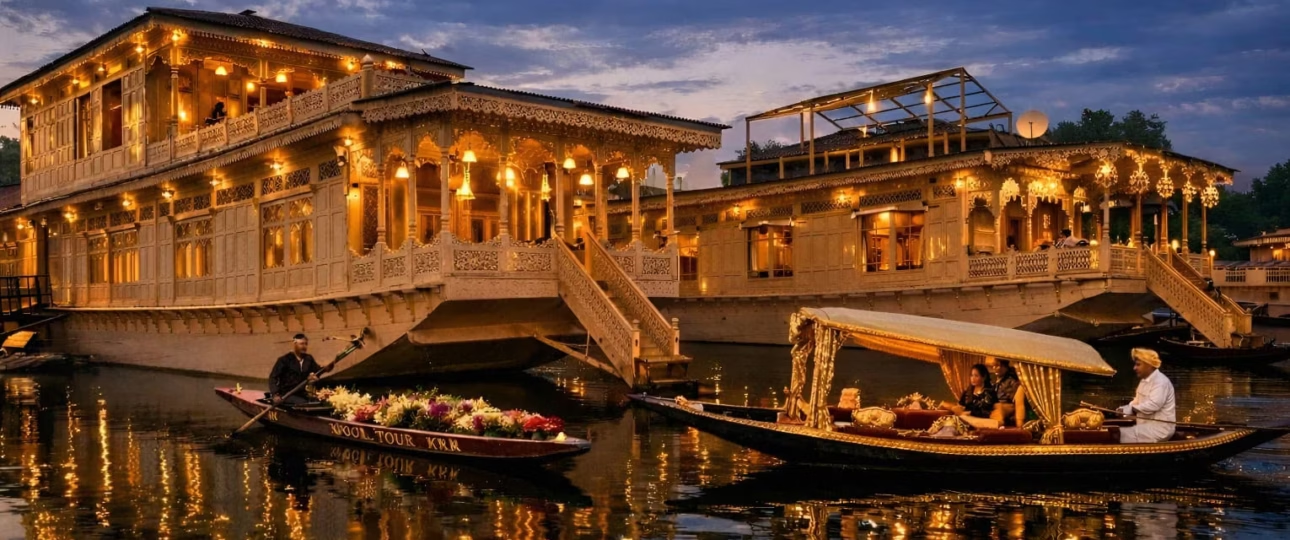
There is a particular kind of silence you only find on Dal Lake at dawn — mist resting low on the water, a lone shikara cutting through it with the soft rhythmic dip of a heart-shaped paddle, and somewhere behind the mist, the carved wooden silhouette of a houseboat waking up for the day. This is Kashmir’s most distinctive invention: a home that floats, born out of a colonial-era law that was never meant to create anything beautiful — and ended up creating one of India’s most romantic stays.
Whether you are planning a honeymoon, celebrating an anniversary, or simply looking for the most memorable few nights of your Kashmir trip, a houseboat stay is not a checkbox on your itinerary. It is, quite genuinely, the experience that defines the Valley.
Here is everything you need to know — the history, the lakes, real package options, honest costing, and the questions every first-time visitor asks before booking.
A Houseboat at a Glance
| What You Want to Know | The Answer |
|---|---|
| What is it | A stationary floating residence, moored on a lake or river, built from carved cedar (deodar) wood |
| Where to find them | Dal Lake, Nigeen Lake, and parts of the Jhelum River, all in Srinagar |
| Origin | British colonial era, mid-1800s, as a workaround to land ownership restrictions |
| Material | Deodar (Himalayan cedar) wood — naturally water- and rot-resistant |
| Craft techniques | Khatamband (wood panelling), Pinjrakari (latticework), hand-carved walnut furniture |
| Typical size | 60 to 100 feet long, about 14 feet wide |
| Typical layout | Deck, living room, dining room, 2–4 bedrooms with attached bathrooms |
| Grading system | Deluxe (top tier), then A, B, C, D grades |
| Number today | Roughly 750 operational houseboats (down from 1,500–2,000 at peak) |
| Best season | April to October for pleasant weather; winter (Dec–Feb) for snow-lover stays with heating |
| Ideal for | Honeymoons, anniversaries, family getaways, solo travellers seeking something different |
| Booking lead time | At least 3–4 weeks ahead for peak season (May–August) |
The History: How a Land Law Created Kashmir’s Most Romantic Invention
Born From a Restriction, Not a Romance
The story of the Kashmir houseboat does not begin with romance. It begins with a law.
During the Dogra era — when Maharaja Gulab Singh and later Maharaja Ranbir Singh ruled the Kashmir Valley under the terms of the 1846 Treaty of Amritsar — a strict rule prevented non-natives from owning land in the region. This was a deliberate policy to protect local sovereignty, but it created an unusual problem for the increasing number of British officials, traders, and travellers who fell in love with Kashmir’s scenery each summer and had nowhere to legally settle, even temporarily.
The British found a clever workaround. If they could not own land, they could own a boat — and a boat, by definition, sits on water, not land. What began as a legal loophole evolved into a design movement.
From Doonga to Floating Palace
Long before the British arrived, local Kashmiris already used simple flat-bottomed boats called doongas for fishing, transport, and basic shelter along the Jhelum River. The British adapted and elevated this existing craft tradition rather than inventing something from nothing — a detail often missed in popular retellings. General Denloff of the British Army is credited with sketching one of the earliest houseboat designs, complete with wood walls, windows, and a deck, after having a doonga named “Mermaid” built for himself.
From there, local Kashmiri craftsmen took over — and what they built went far beyond function. Using deodar (Himalayan cedar) wood, prized for its natural resistance to water and rot, artisans constructed elaborate floating residences featuring Khatamband (geometric wood panelling assembled without a single nail) and Pinjrakari (delicate wooden latticework). Interiors filled up with Victorian-style furniture, hand-knotted Kashmiri carpets, walnut wood carvings, and crewelwork curtains — a striking fusion of colonial taste and centuries-old Kashmiri artistry.
By the late 19th century, houseboats were being named after grand English estates — “New Crystal Palace,” “Houseboat Switzerland,” “New Buckingham Palace” — described charmingly as “a little piece of England afloat on Dal.” One of the earliest fully documented houseboats, “The Kashmir Princess,” was completed in 1885 by a Kashmiri entrepreneur named Pandit Naraindas, after a European visitor took a liking to his converted boat-shop and bought it outright — inadvertently launching what became a thriving local industry.
From Mobile Camps to Stationary Hotels
The earliest houseboats were genuinely mobile — around 40 feet long, poled along the Jhelum River by boatmen or pulled by horses along a towpath when the current was strong. But as visitor expectations grew and the British clientele wanted more spacious, comfortable stays, owners began permanently mooring their houseboats in rows along Dal Lake and Nigeen Lake — transforming them from floating camps into stationary floating hotels, much as we know them today.
Independence, Decline, and the Fight to Survive
When the British left India in 1947, the houseboats remained — and their owners, mostly local Kashmiri families, converted them into commercial accommodations for the growing tide of domestic and international tourists. By the 1970s and 80s, Kashmir’s houseboats were at their cultural peak: European and American travellers spent weeks at a time on the lakes, returning year after year and building lasting friendships with the families who hosted them.
Then came the insurgency of the late 1980s and 1990s. Tourism collapsed almost overnight, and so did much of the houseboat economy. Many boats fell into disrepair; some were abandoned entirely.
The story continues today, and it is not entirely a happy one. According to the Jammu & Kashmir Houseboat Owners Association, Kashmir once had between 1,500 and 2,000 operational houseboats at its peak. That number has fallen to roughly 750 today. The Jhelum River has been hit even harder — from over 200 houseboats historically to just 60–70 remaining. Houseboat families speak of boats sinking from age and neglect, security incidents (including the April 2025 Pahalgam attack) causing sudden mass cancellations, and a shortage of skilled artisans able to carry on the intricate woodworking traditions.
This is part of why a houseboat stay today carries weight beyond the postcard image. Every booking helps sustain a centuries-old craft tradition and the families who have kept it alive for generations — often against considerable odds.
Where to Stay: Dal Lake vs Nigeen Lake vs the Jhelum River
Kashmir’s houseboats are not all the same experience. Where you choose to stay shapes your entire trip.
Dal Lake — The Iconic, Bustling Choice
Dal Lake is the postcard image of Kashmir — and for good reason. Known as the “jewel in the crown of Kashmir,” this 1,583-metre-high lake is deep and stable enough to remain navigable year-round, and it hosts the Valley’s most recognisable sights: floating vegetable markets, the famous floating post office, shikaras gliding past in painted colours, and houseboats lined up in long, photogenic rows.
Staying here means easy access to candlelight dinners on the deck, private shikara rides at sunset, nearby Mughal gardens, and the energy of Kashmir’s most visited waterbody. It is the best choice for first-time visitors and couples who want the full, classic Kashmir houseboat experience — bustling, beautiful, and unmistakably iconic.
Nigeen Lake — The Quiet, Romantic Choice
Just a short distance from Dal Lake but a world apart in mood, Nigeen Lake is quieter, less crowded, and considerably more intimate. Often called the “Jewel Lake,” it is favoured by couples and travellers who want the same craftsmanship and lake setting without the crowds and floating-market traffic of Dal.
Sunset on Nigeen, with the Zabarwan mountain range glowing behind the houseboats, is one of Kashmir’s most underrated sights. If privacy and tranquility matter more to you than proximity to tourist attractions, Nigeen is the better choice.
Jhelum River — The Budget-Friendly, Rustic Choice
For travellers with a tighter budget, a handful of houseboats still operate along stretches of the Jhelum River that flows through Srinagar. These offer a more rustic, riverside charm — generally smaller, simpler, and considerably more affordable than their Dal or Nigeen counterparts.
It is worth knowing, honestly, that the Jhelum houseboat community has shrunk dramatically — from over 200 boats historically to just 60–70 today — so options here are more limited and availability should be checked well in advance. But for budget-conscious travellers who still want the authentic houseboat experience, this remains the most accessible entry point.
What’s Inside: Craftsmanship You’re Actually Paying For
Walking into even a modest houseboat feels different from walking into a hotel room — and that difference is entirely intentional.
The front of the boat typically opens into a deck, ideal for morning chai or evening conversation as the lake light changes colour. Inside, the living room usually carries antique-style wooden furniture, a small library of old English novels (a charming holdover from the colonial era), and intricately carved walnut wood detailing. The dining room sits beyond, often lit by chandeliers and centred around a hand-carved wooden table.
The bedrooms — usually two double rooms and occasionally a larger family room — feature hand-embroidered crewelwork curtains, wall-to-wall Kashmiri carpets, and elaborately carved wooden ceilings using the Khatamband technique, assembled entirely without nails. Most rooms come with attached bathrooms; in the more traditional boats, you will find a bathtub with a surrounding screen rather than an open shower, since flooding the wooden floor is best avoided on a boat.
A genuine, well-maintained houseboat today comes with modern essentials layered into the heritage shell — electricity, hot and cold running water, and increasingly, Wi-Fi and space heaters for the cooler months. Building one from scratch, using the right grade of cedar, can still take skilled craftsmen the better part of two years.
Sample Houseboat Packages for Kashmir 2026
Here are two genuinely useful package structures to give you a sense of what’s available — one designed for romance, one for travellers watching their budget closely.
Package 1: Romantic Dal Lake Escape
Best for: Honeymooners, anniversaries, couples wanting the classic Kashmir experience
| Inclusion | Detail |
|---|---|
| Duration | 2 nights |
| Houseboat category | Deluxe |
| Location | Dal Lake |
| Shikara experience | Private shikara ride included |
| Dining | Candlelight dinner on the deck |
| Meals | Breakfast and dinner included |
| Tentative cost | ₹14,500 per couple (for the full 2-night package) |
This package is built around the moments that make a houseboat stay memorable — a private shikara glide through the lake’s quieter corners at golden hour, followed by a candlelit dinner on a wooden deck with the Himalayas fading into the night sky. Ideal as a standalone romantic escape or as part of a longer Kashmir honeymoon itinerary.
Package 2: Budget Nigeen Retreat
Best for: Budget-conscious travellers, solo travellers, small groups who still want an authentic houseboat experience
| Inclusion | Detail |
|---|---|
| Duration | 2 nights |
| Houseboat category | Standard |
| Location | Nigeen Lake |
| Shikara experience | Shared shikara ride |
| Meals | Breakfast and dinner included |
| Tentative cost | ₹9,750 per couple (for the full 2-night package) |
This package strips away the premium add-ons without compromising on the essential experience — you still get the carved wood interiors, the lake views, and genuine Kashmiri hospitality, at a meaningfully lower price point. A smart pick for travellers prioritising value without sacrificing authenticity.
Note: These are tentative, illustrative costs based on standard market rates for 2026. Actual pricing varies by houseboat grade, season (peak summer commands higher rates), specific add-ons (extra shikara rides, special cuisine, decoration for anniversaries), and the operator you book through. Always request a written tariff confirmation before paying any advance.
Tentative Costing: What a Houseboat Stay Actually Costs
| Category | Approximate Per-Night Cost (Per Couple) | What to Expect |
|---|---|---|
| Budget (Jhelum / Standard Nigeen) | ₹1000–₹2000 | Simple rooms, basic amenities, shared shikara |
| Mid-Range (Standard Dal / A-Grade Nigeen) | ₹2,500–₹6,000 | Comfortable rooms, attached bathrooms, private shikara optional |
| Deluxe (Dal Lake, premium grade) | ₹7,000–₹10,000 | Spacious rooms, heritage interiors, private shikara, candlelight dinner options |
| Luxury (Multi-bedroom heritage houseboats) | ₹10,000–₹30,000+ | Full heritage suites, premium dining, dedicated host family service |
Add-on costs to budget for:
- Extra shikara rides beyond what’s included: ₹500–₹1,500 per ride
- Candlelight or special anniversary dinner setup: ₹1,500–₹4,000
- Heaters during winter stays: often included, but confirm in advance
- Local sightseeing (Mughal Gardens, Shankaracharya Temple) via shikara or taxi: ₹1,000–₹3,000 per day
Frequently Asked Questions About Kashmir Houseboats
1. Is staying on a Kashmir houseboat safe? Yes. Licensed houseboats are registered and monitored by the J&K Tourism Department, which maintains a grading system (Deluxe, A, B, C, D) based on facilities and upkeep. Always verify that the houseboat you book is officially registered.
2. Are meals included in houseboat packages? Most standard packages include breakfast and dinner. Candlelight dinners, special Kashmiri Wazwan spreads, or multi-course anniversary dinners are usually optional add-ons charged separately.
3. Which is better — Dal Lake or Nigeen Lake? Dal Lake offers the iconic, bustling experience with floating markets and easy access to major attractions. Nigeen Lake offers a quieter, more private, equally beautiful setting. Choose based on whether you want energy or tranquility.
4. What is the best season to stay on a Kashmir houseboat? April to October offers the most pleasant weather for houseboat stays, with May to August being peak season. Winter stays (December to February) are magical for snow lovers, though heaters are essential and some amenities may be limited.
5. How do I book a houseboat in budget-friendly options? Choose Nigeen Lake or Jhelum River options over Dal Lake for noticeably lower tariffs. Standard-grade boats also cost significantly less than Deluxe-grade ones with similar core amenities.
6. How do I book a Kashmir houseboat? Through local travel agencies in Srinagar, established Kashmir tour operators, or verified online booking platforms. Always confirm the houseboat’s registration and read recent reviews before paying any advance.
7. What is the history behind Kashmir’s houseboats? They originated in the mid-1800s as a workaround to a Dogra-era law that prohibited foreigners from owning land in Kashmir. The British commissioned floating wooden residences instead, which Kashmiri artisans developed into the elaborate cedar-wood houseboats seen today.
8. What wood are houseboats made from, and why? Deodar (Himalayan cedar), chosen specifically because it naturally resists water damage and rot — essential for a structure that sits in a lake year-round.
9. How many houseboats are there in Kashmir today? Approximately 750 operational houseboats remain today, down significantly from an estimated 1,500–2,000 during the industry’s peak in the late 20th century.
10. Are houseboats stationary or do they move? Almost all Kashmir houseboats today are stationary, permanently moored at fixed positions along the lake edges. They are not mobile like the houseboats found in Kerala’s backwaters.
11. How big are Kashmir houseboats? Typically between 60 and 100 feet long and around 14 feet wide, with two to four double bedrooms, a living room, a dining room, and a front deck.
12. What is Khatamband? A traditional Kashmiri wood panelling technique used in houseboat ceilings, where small geometric wooden pieces are fitted together entirely without nails — a defining feature of premium houseboat interiors.
13. Do houseboats have modern amenities like Wi-Fi and hot water? Most well-maintained houseboats today offer electricity, hot and cold running water, and increasingly Wi-Fi, while retaining their heritage wooden interiors and carved furnishings.
14. Is a houseboat stay good for a honeymoon? Yes — it is widely considered one of India’s most romantic stay experiences, combining privacy, heritage craftsmanship, candlelit dining options, and stunning lake and mountain views.
15. Can families and groups stay on houseboats? Yes. Many houseboats offer multiple bedrooms (some up to 6–8 bedrooms in larger heritage boats), making them suitable for families and small groups, not just couples.
16. What is the houseboat grading system? Houseboats are graded Deluxe (highest), followed by A, B, C, and D grades, similar to a hotel star-rating system, based on facilities, furnishing quality, and upkeep.
17. How long does it take to build a houseboat? A genuine, well-crafted houseboat — particularly one with detailed Khatamband and Pinjrakari woodwork — can take skilled artisans up to two years to complete.
18. Why has the number of houseboats declined over the years? A combination of factors: the 1990s insurgency that collapsed tourism, ongoing security-related cancellations (including after the 2025 Pahalgam attack), environmental degradation of the lakes, ageing structures, and a shrinking pool of artisans skilled in traditional houseboat carpentry.
19. Is it possible to negotiate houseboat prices directly with owners? Yes, particularly during off-peak months. Many houseboats are still family-run, and direct booking with the owner (rather than through a middleman agency) can sometimes secure better rates and more personalised service.
20. What should I check before finalising a houseboat booking? Verify official registration with J&K Tourism, check recent guest reviews, confirm exactly what’s included (meals, shikara rides, heating if travelling in winter), and get a written cost confirmation before paying any advance.
The Bottom Line
A Kashmir houseboat is not simply a place to sleep — it is a living museum of a craft tradition, a quiet act of resistance against a colonial-era restriction that, two centuries later, has become one of the Valley’s most treasured cultural symbols. The carved cedar ceilings, the handwoven carpets underfoot, the gentle creak of wood against water at night — these are details no hotel room can replicate.
Whether you choose the iconic buzz of Dal Lake, the quiet romance of Nigeen, or the rustic affordability of the Jhelum, a night or two on a Kashmir houseboat is, quite simply, the experience that completes a visit to the Valley. And in choosing to stay on one, you are also helping keep alive a centuries-old tradition that today’s houseboat families are fighting hard to preserve.
Book early, ask the right questions, and let the lake do the rest.
All historical and factual details in this article have been cross-verified against Daily Excelsior, Kashmir Observer, Atlas Obscura, CNN Travel, and traditional craft documentation sources. Tentative package costing reflects standard 2026 market rates and should be confirmed directly with operators before booking. Last updated: 27 June 2026.