Kashmir in October & November 2026: Autumn, Snow & Travel Guide
By: JKL Travels – Kashmir Travels | September 2026
Autumn is changing the way travellers experience Kashmir. Here is what October and November 2026 have in store—from Srinagar’s golden chinars and Dal Lake houseboats to Gulmarg’s first winter possibilities, Pahalgam’s mountain landscapes and practical Kashmir trip costs.
There are two versions of Kashmir most travellers already know.
The first is green: meadows, gardens, lakes and mountains under a summer sky.
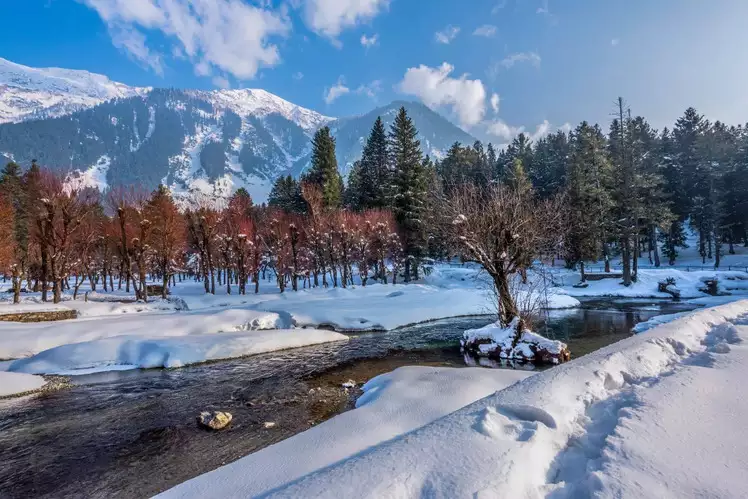
The second is white: Gulmarg covered in snow, ski slopes alive with winter activity and mountains disappearing beneath a blanket of powder.
But between those two familiar pictures lies another Kashmir.
It begins when summer quietly retreats and the chinar trees around Srinagar start changing colour. The mornings become cooler, the evenings sharper and the mountains begin preparing for winter.
By November, the landscape is already telling a different story.
This is autumn-to-winter Kashmir—and it may be one of the most interesting times to explore the valley.
For travellers planning a Kashmir trip in October or November 2026, the attraction isn’t simply the possibility of snow. It is the opportunity to experience the valley during a dramatic seasonal transition, when the crowds are different, the colours change almost week by week and destinations such as Srinagar, Gulmarg and Pahalgam reveal different personalities.
And if you’re wondering whether this is the right time to book, the answer depends on what you actually want from Kashmir.
Kashmir Is Not One Destination. It Is Four Seasons.
Ask someone about Kashmir and chances are they will describe a picture.
Ask a traveller who has visited Kashmir in different months and the answer becomes much more complicated.
The valley changes considerably through the year.
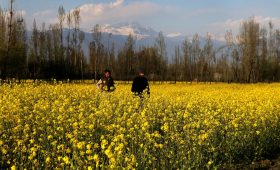
Spring brings blossoms and the famous tulip season.
Summer brings lush green landscapes and comfortable mountain escapes.
Autumn introduces golden and crimson foliage.
Winter brings cold, snow possibilities and Gulmarg’s winter-sports identity.
That is why the question “What is the best time to visit Kashmir?” does not have one universal answer.
A traveller chasing snow needs a different calendar from someone looking for autumn photography.
A family may prioritise comfortable sightseeing.
A honeymoon couple may prefer quiet evenings and a houseboat.
A photographer may deliberately choose October because the landscape itself becomes the attraction.
Current 2026 Kashmir travel guides are increasingly focusing on this seasonal distinction, with October being highlighted for autumn colours and November as the transition into winter.
October in Kashmir: When the Valley Turns Gold
October is when Kashmir begins to look noticeably different.
The famous chinar trees gradually move through autumn colours, transforming parts of Srinagar into a landscape of gold, amber and red.
The effect is particularly striking around the city’s Mughal gardens and lakefront areas.
For travellers, October also offers an appealing balance.
The weather is cooler than the peak summer period, while the valley has not yet fully entered the harsher winter phase.
That makes it particularly attractive for people who want to spend their days outdoors.
A typical October Kashmir holiday can combine:
- Srinagar sightseeing
- Dal Lake and shikara rides
- Mughal gardens
- A houseboat stay
- Gulmarg
- Pahalgam
- Sonamarg, subject to conditions
- Local cuisine
- Shopping and handicrafts
Recent 2026 travel guides similarly describe October as a strong month for autumn colour, photography, sightseeing and cooler weather, while noting that snow at valley level should not be treated as a normal expectation.
Planning an October Kashmir holiday?
The Chinar Calendar: Why Your October Date Matters
Here’s something many generic Kashmir guides miss.
October 1 and October 31 are not necessarily the same Kashmir experience.
Autumn colour develops progressively.
Early October may still retain plenty of green, while later October and early November can offer stronger autumn tones depending on local weather and the year’s seasonal progression.
That means travellers interested specifically in Kashmir autumn colours should think beyond the name of the month.
They should think about the timing within the month.
For photographers, this can make a significant difference.
For families, it may simply mean enjoying cooler weather and beautiful scenery.
For couples, it creates a more intimate landscape for leisurely drives and walks.
And for anyone who has already experienced Kashmir in summer, autumn can make the valley feel surprisingly new.
November in Kashmir: The Month Between Two Worlds
November is where the story becomes more interesting.
Autumn doesn’t disappear overnight.
Instead, the valley gradually moves towards winter.
The final chinar colours can remain visible during the earlier part of the month, while temperatures continue to fall. Higher elevations become increasingly wintry, and the possibility of early snow becomes part of the travel conversation.
Current 2026 travel information describes November as a hinge between late autumn and winter, with increasing winter conditions at higher elevations as the month progresses.
For travellers, that creates two very different November experiences.
Early November
Expect late-autumn scenery, cooler temperatures and the possibility of lingering chinar colours.
Late November
Expect colder weather, shorter sightseeing windows and a stronger winter atmosphere, particularly in higher destinations.
This is why a flexible itinerary becomes more valuable as November progresses.
The Question Everyone Asks: Will It Snow?
Let’s answer it without the marketing spin.
Maybe.
Snowfall is weather-dependent, altitude-dependent and variable from year to year.
Higher areas can receive snow before Srinagar does. Gulmarg’s upper reaches may experience winter conditions while the city remains relatively snow-free.
Recent Kashmir travel guides also make the distinction between early-season snow possibilities and the more established winter period.
So if your dream is to wake up in a completely snow-covered Kashmir, December to February is generally a more logical window to investigate.
If you’re travelling in October or November, however, don’t make snowfall the only reason for going.
There is an entire season waiting before the snow arrives.
And that season has its own character.
Gulmarg: The First Place to Watch When Winter Arrives
Gulmarg is perhaps the clearest example of Kashmir’s seasonal transformation.
During autumn, the destination is about mountain landscapes, cool weather and outdoor exploration.
As winter develops, snow begins changing the character of the entire destination.
Gulmarg’s Gondola is one of its major attractions, but travellers should remember that high-altitude operations can be affected by weather and local operating conditions.
The smart approach is to check the latest status rather than build the entire holiday around an assumption.
October in Gulmarg
Mountain views, crisp weather and autumn landscapes.
November in Gulmarg
Increasingly cold conditions and the possibility of early winter weather.
December onwards
A stronger focus on snow, skiing and winter experiences, depending on actual snowfall.
Srinagar: Don’t Rush Through the City
There is a tendency among first-time visitors to arrive in Srinagar, spend a night or two and immediately move towards the mountains.
That can be a mistake.
Srinagar is not merely the gateway to Kashmir.
It is one of the experiences.
Start with Dal Lake.
A shikara ride is an obvious choice, but the timing can change the experience completely. Early morning offers a quieter atmosphere, while evening brings a different quality of light across the water.
Then there are the houseboats.
A Dal Lake houseboat stay can turn a conventional Kashmir itinerary into something much more distinctive.
Instead of simply photographing the lake, travellers wake up on it.
That difference matters.
The Mughal Gardens Become a Different Experience in Autumn
Nishat Bagh and Shalimar Bagh are among Srinagar’s most recognisable historic gardens.
Their terraces, water channels and mountain views already make them worthwhile.
Autumn adds another dimension.
The changing trees around the gardens introduce warmer colours into the landscape, making them particularly appealing to photographers and travellers looking for a slower sightseeing experience.
Rather than rushing through several attractions, spend time walking, photographing and simply observing the landscape.
This is the kind of travel experience that doesn’t always fit into a conventional package brochure.
It should still be part of the itinerary.
Pahalgam: The Place to Slow the Kashmir Trip Down
If Srinagar is cultural and Gulmarg is seasonal, Pahalgam is about atmosphere.
The Lidder Valley, forests and surrounding mountains create the kind of landscape where a traveller can easily spend several hours doing very little—and feel that the day was well spent.
Pahalgam works especially well for couples and families because the destination does not need to be rushed.
A good itinerary can leave time for scenic drives, walks, local experiences and photography rather than attempting to cover every possible attraction.
For honeymoon travellers, this can be the quieter part of the trip.
For families, it can provide a break from long sightseeing days.
For repeat visitors, it can become a base for exploring beyond the standard Kashmir circuit.
Sonamarg: Add It With a Weather Check
Sonamarg is another popular excursion, but it is also a destination where seasonal conditions matter.
Its high-altitude landscape means that weather and road conditions can influence accessibility and sightseeing.
For an October itinerary, it may fit comfortably into a Srinagar-based circuit.
For a later November trip, travellers should check current conditions before locking the day into a rigid schedule.
That flexibility is not a weakness in mountain travel.
It is good planning.
Kashmir Beyond the Three-Destination Checklist
Srinagar.
Gulmarg.
Pahalgam.
Most Kashmir packages revolve around those three names.
They should.
But the experience becomes richer when travellers look beyond the checklist.
Taste Kashmir
A Kashmir holiday should include local cuisine.
Wazwan is more than a meal; it is an important part of Kashmiri culinary culture.
Explore Kashmir’s Craft Traditions
Pashmina, papier-mâché and walnut woodwork are closely associated with the region’s craftsmanship.
Travellers should ask questions about authenticity, provenance and quality before making expensive purchases.
Walk Through Old Srinagar
The historic areas of the city provide a different perspective on Kashmir’s cultural identity.
Leave Room for Nothing
This may sound strange in a travel guide.
But some of the best moments happen when the itinerary has no activity scheduled.
A morning beside Dal Lake.
A cup of kahwa.
A mountain view from a hotel balcony.
A quiet drive through the valley.
Those moments are part of the journey too.
How Much Does a Kashmir Trip Cost in 2026?
The answer depends on how you travel.
A couple staying in a 3-star hotel and using a standard private vehicle will have a very different budget from a family choosing premium accommodation and additional activities.
For a 5N/6D Kashmir holiday in the 3-star category, travellers can use the following as a broad planning estimate:
| Expense | Indicative Budget Per Person |
|---|---|
| 3-star accommodation | ₹7,000–₹10,000 |
| Breakfast & dinner | ₹3,500–₹5,000 |
| Transportation & sightseeing | ₹5,000–₹7,500 |
| Standard sightseeing-related expenses | ₹1,000–₹2,000 |
| Approximate land package | ₹16,500–₹24,500 |
Comfortable planning range
₹18,500–₹22,500 per person
For two adults:
Approximately ₹37,000–₹45,000
This is a tentative planning range, not a fixed quotation. Travel dates, hotel availability, vehicle category, group size, houseboat selection and seasonal demand can change the final price.
JKL Travels currently publishes Kashmir packages at different price points, illustrating how significantly the cost can change depending on the itinerary and inclusions. Its Kashmir destination listings currently show a six-day “Kashmir Calling” option from ₹14,000, while other products have different pricing and durations.
Before you compare prices, ask what is included.
A low headline price may exclude:
- Transportation
- Meals
- Gondola tickets
- Entry tickets
- Pony rides
- Houseboat stay
- Airport transfers
- Additional sightseeing
- Personal expenses
A 5N/6D Kashmir Plan That Doesn’t Feel Rushed
Day 1 — Arrive in Srinagar
Airport pickup and hotel check-in.
If your arrival time permits, enjoy a shikara ride on Dal Lake.
Stay: Srinagar
Day 2 — Discover Srinagar
Explore Mughal gardens, Dal Lake and selected heritage attractions.
Keep the evening free for local food and shopping.
Stay: Srinagar
Day 3 — Gulmarg
Drive to Gulmarg.
Enjoy the mountain landscape and consider the Gondola if it is operating and weather permits.
Stay: Srinagar or Gulmarg
Day 4 — Pahalgam
Travel to Pahalgam and spend the day exploring the valley.
Avoid filling every hour with activities.
Stay: Pahalgam or Srinagar
Day 5 — Sonamarg or Flexible Day
If conditions permit, travel to Sonamarg.
If weather or road conditions are unsuitable, use the day for Srinagar, shopping, local experiences or simply relaxing.
Stay: Srinagar
Day 6 — Departure
Breakfast, check-out and airport transfer.
What Should You Pack for Kashmir in October and November?
Don’t make the classic mistake of packing for the weather you expect in Delhi.
Kashmir requires layers.
October
- Light jacket
- Sweater/fleece
- Comfortable walking shoes
- Warm evening layer
- Sunglasses
- Sunscreen
November
Add:
- Thermal wear
- Heavier jacket
- Gloves
- Warm socks
- Cap
- Additional winter layers
If Gulmarg or another high-altitude destination is part of your trip, carry warmer clothing regardless of the temperature in Srinagar.
October or November: Which Kashmir Is Right for You?
| You want… | Consider |
|---|---|
| Autumn colours | October |
| Chinar photography | October–early November |
| Comfortable sightseeing | October |
| Colder weather | November |
| Early winter atmosphere | November |
| Greater focus on snow | December–February |
| Skiing/winter sports | Core winter season |
| Quiet, seasonal travel | October–November |
The answer is not about finding a universally “best” month.
It is about choosing the month that matches your reason for travelling.
Kashmir for Couples, Families and Friends
For Couples
Consider a houseboat stay, private shikara ride, Gulmarg excursion and a slower Pahalgam experience.
For Families
Prioritise comfortable hotels, manageable driving times and sufficient breaks.
For Senior Travellers
Avoid overly aggressive itineraries and allow more time between destinations.
For Friends
Private transportation and flexible sightseeing can make group travel more convenient.
For Photographers
Build the trip around October and early November landscapes, especially Srinagar’s chinar-lined areas and mountain destinations.
For Snow Lovers
Look towards the deeper winter period and monitor actual weather rather than relying on fixed-date promises.
The 7 Kashmir Questions You Should Ask Before Booking
1. Is snowfall guaranteed?
No. Snowfall depends on actual weather and elevation.
2. Is October a good month for Kashmir?
Yes, especially for autumn landscapes, sightseeing and photography.
3. Is November too cold?
It is considerably colder, but suitable with proper winter clothing.
4. How many days are enough?
Five nights and six days is a practical first-trip itinerary.
5. Should I stay on a houseboat?
For first-time visitors, one night can be a memorable addition.
6. How much should a couple budget?
A tentative 3-star 5N/6D land package can be around ₹37,000–₹45,000 for two adults, depending on inclusions and dates.
7. Should I book the cheapest package?
Compare inclusions, not just the starting price.
The Kashmir Experience Is Bigger Than a Snowfall Photograph
Perhaps that is the biggest reason to consider travelling before winter fully arrives.
When you stop measuring Kashmir only by snowfall, the valley suddenly becomes much bigger.
It becomes a place of changing colours.
Of lakes and mountains.
Of gardens and old neighbourhoods.
Of kahwa and Wazwan.
Of houseboats and shikaras.
Of long mountain drives where the destination becomes less important than the road.
And eventually, when winter does arrive, the landscape changes once again.
Gulmarg turns white.
The mountains become sharper against the sky.
The valley becomes quieter.
And the traveller who came looking for snow discovers that the most memorable part of the journey may have happened before the first snowflake appeared.
Autumn Has Its Own Kashmir Story
For years, Kashmir tourism has been sold through two seasons: green summer and white winter.
The reality is far more interesting.
Autumn Kashmir has its own identity.
October brings chinars and crisp mountain air.
November brings the transition towards winter.
December onwards brings increasing snow possibilities, particularly at higher elevations.
There is no need to choose one season as universally superior.
Choose according to the experience you want.
And if you’re still deciding, start with three questions:
Do I want autumn colours or snow?
How much time do I have?
What is my realistic budget?
The answers will usually tell you more about when to travel than any generic “best time to visit” list.
Ready to See Kashmir Between the Seasons?
The valley is changing.
The chinars are preparing their autumn show. The mountains are moving towards winter. Srinagar is taking on a different colour, while Gulmarg is waiting for the season that will transform it again.
If your idea of Kashmir goes beyond a checklist of tourist attractions, this is the time to plan it differently.
Choose the season. Choose the pace. Choose the experiences that matter to you.