🕉
Shri Amarnath Yatra 2026
The Definitive Pilgrim’s Companion — History, Routes, Rituals, Itineraries, Costs & Everything That Stands Between You and Baba’s Darshan
3 July – Yatra Opens | 28 Aug – Yatra Closes | 57 – Sacred Days | 15 Apr – Registration Opens | 3,888m – Cave Altitude
The Mountain That Has Called Pilgrims for a Thousand Years
Before there were roads, before there were base camps, before RFID wristbands or helicopter tickets — there was only the mountain, the cave, and the inexplicable pull that has drawn the devout upward through snow and stone for over a millennium.
The Cave at the End of the World
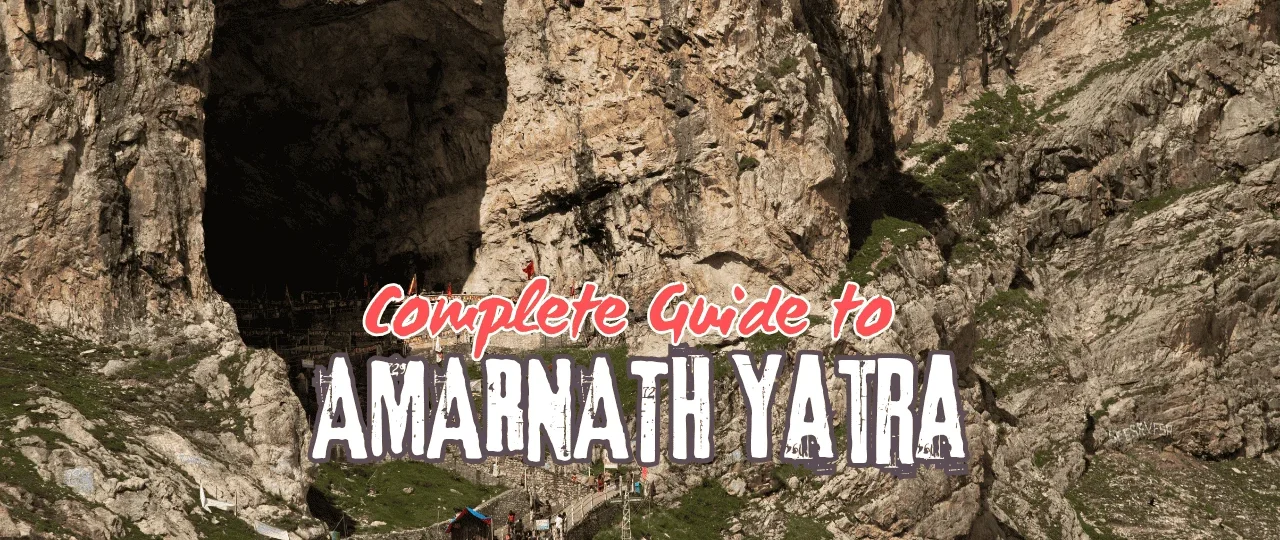
At 3,888 metres above sea level, deep in a mountain basin surrounded on three sides by permanent snowfields in South Kashmir’s Himalayan heartland, the Amarnath Cave sits in a silence that feels genuinely sacred. It is not a silence of emptiness — it is a silence of concentrated presence. Even the most irreligious traveller who makes the approach typically describes the experience in terms that reach instinctively for the spiritual.
Within the cave lives a swayambhu (self-manifested) ice Shivlinga — a stalagmite formed by freezing water dripping from a crack in the cave ceiling. No human hands shape it. No priest maintains it. It waxes naturally with the lunar cycle, reaching its fullest form around the full moon of the Hindu month of Shravan (July–August), then receding until the following year. The Shivlinga’s maximum recorded height in recent decades has been approximately 6 to 9 feet; its minimum, towards the end of the Yatra season, a modest and intimate column of a few inches. That the same water, the same cave, the same crack in the same rock should produce this lunar-cycle variation has never been scientifically explained in a way that satisfies the devout. For them, the explanation is simple: this is Shiva’s presence, as undeniable and unmeasurable as the divine itself.
The Amar Katha — Why This Cave, of All Caves
The Amarnath Cave’s sanctity derives not only from the Shivlinga but from its identity as the precise location where Lord Shiva imparted the Amar Katha — the secret of immortality — to Goddess Parvati. This story, recorded in the Bhrigu Samhita and referenced across multiple Puranas, explains why the cave is not merely a shrine but a sacred site of cosmic revelation.
Parvati had asked, persistently and across several lifetimes of questioning, to understand why Shiva — who wears a garland of skulls, who smears himself with ash from funeral pyres — remains eternally alive while she must die and be reborn. Why does he remain, and she must keep returning? Shiva, moved by her devotion and by the profundity of the question, agreed to tell her the secret. But the secret of immortality could not be shared in a place where any living being might overhear — for to hear it was to become immortal, and immortality cannot be distributed carelessly across creation.
So Shiva shed everything as he journeyed to find the right place. His vehicle Nandi the bull, he left at what is now called Pahalgam — the village of the bull. His serpents he released at Anant Nag. The crescent moon from his matted hair he placed at Chandanwari. His son Ganesha he left at Mahagunas. His other companions he dismissed at Panchtarni — five rivers, five directions of the self. At the cave, stripped of all accompaniments, stripped of all identity, he sat with Parvati and told her the Amar Katha.
Two white doves, nesting in the cave, overheard everything. They became immortal — and are said to inhabit the cave to this day. Pilgrims who sight them consider the moment among the most auspicious of their lives. Our guides in Srinagar have met pilgrims who came specifically because a relative, or a relative’s relative, once saw the doves — and they want their own encounter with that possibility.
Every stop on the Pahalgam route is not a logistical waypoint. It is a place where Shiva left something of himself behind on the way to absolute truth. Walking the route is to retrace that shedding — to arrive at the cave progressively lighter, as he did.
— JKL Travels Yatra Commentary
The Historical Record
The pilgrimage’s documented history begins in the 12th century, when Kashmiri historian Kalhana’s Sanskrit chronicle Rajatarangini makes reference to the shrine. A century later, Sufi mystic Lal Ded’s 15th-century verses weave Amarnath into Kashmir’s devotional literary tradition. In the colonial period, W.R. Lawrence’s meticulous 1895 work The Valley of Kashmir describes an already well-organised pilgrimage drawing thousands annually — suggesting the tradition was then already ancient. In post-independence India, the Shri Amarnathji Shrine Board (SASB) was constituted by state legislation to manage what had grown into one of South Asia’s largest annual religious gatherings: between 3 and 5 lakh pilgrims in a single 57-day season.
The Lunar Timing — Why Shravan Is Sacred
The Yatra is timed to the Hindu month of Shravan because the Shivlinga is at its most magnificent during this period. The ice formation grows from the new moon, peaks at Jyeshtha Purnima (the full moon that traditionally opens the Yatra), and then recedes through August. Pilgrims who manage to time their visit within the first week of the Yatra — around the full moon — see the Shivlinga at its grandest. The Yatra concludes on Raksha Bandhan, when priests perform the ceremonial closing puja and the cave is sealed for another year.
The lunar cycle, the ice, the cave, the season — everything aligns in a coordination that, for believers, is not coincidental. It is orchestrated. Deliberate. The mountain opens its most sacred chamber for exactly 57 days, and then closes it again. The invitation is annual, finite, and unmistakable.
Age Eligibility — No ExceptionsOnly pilgrims aged 13 to 70 years may undertake the Yatra. Children below 13, adults above 70, and pregnant women at any stage are not permitted. These restrictions are enforced at registration; no appeals or exceptions are granted.
“The mountain does not come to the pilgrim. The pilgrim must go to the mountain. And in going — in the effort, the cold, the altitude, the sacrifice — the journey itself becomes the prayer.”
Three Paths to Baba’s Darshan
Whether you have five days or one, whether you trek or fly, whether you are 25 and fit or 68 and determined — there is a path that has been made for you. What matters is not how you arrive. What matters is that you do.
The original path — the one that follows the footsteps of Lord Shiva, retracing his divine journey to the cave of immortality. Every halt corresponds to a place in the mythology. The scenery is among the finest in all of Kashmir’s highlands. Ideal for first-timers and all those who want the complete, unhurried pilgrimage experience.
-
Day 0
Nunwan Base Camp, Pahalgam — 2,740 m
Arrive, register, collect RFID wristband. Rest fully. Do not rush into the trek on Day 0 under any circumstances.
-
Day1
Nunwan → Chandanwari — 16 km, 2,895 m
Gradual ascent through pine forest. Shiva left Nandi here — the literal meaning is “village of the bull.” First camp with excellent lahar facilities.
-
Day2
Chandanwari → Sheshnag — 13 km, 3,657 m
Cross Pissu Top (the trek’s first significant challenge — steep but brief), then descend to the milky-green glacial lake of Sheshnag. One of the most beautiful camp settings in the Himalayas.
-
Day3
Sheshnag → Panchtarni — 14 km, via Mahagunas 4,890 m
The hardest day — cross Mahagunas Pass (the trek’s highest point) and descend to Panchtarni. Start before dawn. Five rivers meet here; Shiva left all his companions at this point.
-
Day4
🕉 Panchtarni → Holy Cave → Return — 6 km each way, 3,888 m
The day everything has been building toward. Darshan of the ice Shivlinga. Return to Panchtarni. Most pilgrims describe the experience as beyond language.
-
Day5
Return to Pahalgam
Descend same route, or by helicopter from Panchtarni to Pahalgam helipad. The return always feels faster — the mountain releases you gently.
Shorter in distance, unforgiving in gradient. The Baltal route is the choice of return pilgrims, time-pressed trekkers, and those taking the helicopter. The entire round trip can be accomplished in a single long day. The scenery is austere and dramatic — a deep mountain gorge funnelling you relentlessly upward.
-
Day0
Baltal Base Camp — 2,743 m (87 km from Srinagar)
Arrive, register, RFID collection. Ideally, spend the previous night in Sonamarg for partial acclimatisation — it’s only 15 km from Baltal.
-
Day1
Baltal → Domail → Barari Marg → Holy Cave — 14 km
Sustained climb, 4–6 hours ascending. The gradient exceeds anything on the Pahalgam route — every kilometre gains significant altitude. Ponies and palkis available throughout. Many pilgrims opt for helicopter from Neelgrath Helipad (1 km from base camp) to Panchtarni, then trek the final 6 km.
-
—
🕉 Darshan at the Holy Cave — 3,888 m
The same ice Shivlinga. The same divine silence. The route is different; the destination is identical. Baba does not distinguish by which path you arrived.
-
Day2
Descent to Baltal
Return same day or the following morning. The descent is considerably faster than the ascent. Many pilgrims complete the full round trip within 10–12 hours.
The Helicopter Option — Darshan Without the Full Trek
The helicopter service has made the Yatra accessible to a category of pilgrim who might never otherwise have been able to make it — the elderly, those with mobility limitations, and those with genuinely only one spare day. Since its introduction it has been one of the most requested services JKL Travels handles, and demand consistently outstrips available slots.
The most important thing to understand: even by helicopter, a 6-km trek from Panchtarni helipad to the Holy Cave remains. Pony rides (approximately ₹400–₹800 one-way) and palkis (₹1,000–₹2,000 one-way) are available from Panchtarni for those unable to walk the final stretch.
Neelgrath (Baltal) → Panchtarni
- One-way fare: ₹3,250 per person
- Round-trip fare: ₹6,500 per person (usually mandatory)
- Flight duration: 12–15 minutes
- Operators: Himalayan Heli, Arrow Aviation, Global Vectra, Thumby Aviation
- Baggage: 1 handbag, max 5 kg
- Children under 2: free on adult’s lap
Pahalgam Helipad → Panchtarni
- One-way fare: ₹4,900 per person
- Round-trip fare: ₹9,800 per person
- Flight duration: 18–22 minutes
- Longer scenic flight over the Pahalgam valley
- Suits those already in Pahalgam for Kashmir sightseeing
- Same 6-km trek / pony from Panchtarni to cave
Pahalgam vs. Baltal:
Every Variable Compared
This is the question every pilgrim wrestles with. This table gives you every dimension of the decision — so you can stop asking and start planning.
| Feature | Pahalgam Route (Traditional) | Baltal Route (Shorter) |
|---|---|---|
| Total Distance (one way) | 48 km | 14 km |
| Difficulty | Moderate — gradual, sustained ascent | Steep — relentless climb per km |
| Duration on Foot | 3 to 5 days | 1 to 2 days (or single long day) |
| Base Camp Altitude | 2,740 m (Nunwan, Pahalgam) | 2,743 m (Baltal, near Sonamarg) |
| Highest Point on Route | Mahagunas Pass — 4,890 m | The cave itself — 3,888 m |
| Cave Altitude | 3,888 m | 3,888 m (identical) |
| Scenery & Experience | Outstanding — Chandanwari pine forests, Sheshnag glacial lake, Panchtarni river confluence | Dramatic gorge, austere mountain canyon — visually striking but less varied |
| Spiritual Route Significance | Retraces Lord Shiva’s mythological journey — each stop a divine abandonment | Modern route — equally sacred destination, different approach |
| Helicopter Hub | Pahalgam Helipad → Panchtarni (₹9,800 RT) | Neelgrath (Baltal) → Panchtarni (₹6,500 RT) |
| Trek After Helicopter Drop | 6 km (same from Panchtarni) | 6 km (same from Panchtarni) |
| Camp Infrastructure | Extensive — large camps, medical posts, multiple langars at all major stops | More basic — primary camp at Baltal, fewer intermediate facilities |
| Pony/Palki Availability | Well-organised throughout; multiple service points | Available, more limited range |
| Best Weather Window | Consistent July–mid-August | Consistent July–mid-August |
| Best For | First-timers · Families · Scenic trekkers · Those wanting full pilgrimage experience | Return pilgrims · Fit experienced trekkers · Helicopter-primary pilgrims |
| Minimum Time Required | 5 days from Srinagar arrival | 2 days from Srinagar arrival (with helicopter) |
Paperwork & Formalities:
Six Steps, No Shortcuts
The SASB has built a clear, strictly enforced registration system. Every step is non-negotiable. Missing any one means being turned away — regardless of how far you have travelled.
- Compulsory Health Certificate (CHC) — From 8 April 2026
Visit an SASB-authorised doctor and obtain your CHC confirming fitness for high-altitude trekking. Must be dated on or after 8 April 2026. Without it, registration is impossible. Conditions that typically disqualify: uncontrolled cardiac disease, severe respiratory conditions, pregnancy at any stage. Authorised doctor list: sasb.nic.in. - Advance Registration — Opens 15 April 2026
Online at sasb.nic.in, or at any of 550+ designated branches of SBI, PNB, ICICI, Axis Bank, Yes Bank, and J&K Bank. Your registration specifies route, date, and batch number — choose carefully. July full-moon dates fill within 24–48 hours of opening. Do not delay. - RFID Wristband Collection
Collect at Bhagwati Nagar Camp (Jammu), Nunwan Camp (Pahalgam), or Baltal Camp before beginning the trek. Must be worn at all times from collection until exit. Loss must be reported immediately to nearest SASB camp office. - Valid Government Photo ID
Original Aadhaar, driving licence, or passport plus minimum 2 photocopies. Must exactly match the name and ID number on your registration permit. - Helicopter Booking (If Applicable)
Only through official SASB-authorised portal when bookings open (typically April–May 2026 — after official service confirmation). Non-refundable, non-transferable. Print confirmation; carry same ID. Do NOT pay any operator before official SASB service confirmation for 2026. - Travel Insurance
Not mandatory but essential. Standard policies rarely cover high-altitude trekking above 3,000 m. Explicitly obtain high-altitude medical coverage and emergency evacuation coverage. Emergency helicopter evacuation without insurance costs ₹50,000 to ₹2,00,000+.
Combo Itineraries with Full Group Costings
From a focused 5-day Yatra to an 11-day grand pilgrimage circuit combining both Himalayan shrines with Kashmir’s finest landscapes — four itineraries covering every combination, with detailed costings for groups of 2 to 16 persons.
Itinerary A — Amarnath Yatra Only (Helicopter)
5 Days / 4 Nights · Srinagar → Sonamarg → Baltal → Amarnath Cave → Srinagar
Airport pickup. 3-star hotel. Evening orientation, RFID collection assistance. Overnight Srinagar.
Drive along the Sindh River valley. Check-in 3-star Sonamarg. Acclimatisation walk, rest. Overnight Sonamarg.
Early departure to Neelgrath Helipad (Baltal, 6 km). Helicopter to Panchtarni. 6 km trek/pony to cave. Darshan. Return helicopter. Drive to Sonamarg. Overnight Sonamarg.
Drive return. Shikara ride on Dal Lake. Evening leisure. Overnight Srinagar.
Breakfast. Checkout. Airport transfer.
| Component | 2 Pax | 4 Pax | 6 Pax | 10 Pax | 14 Pax | 16 Pax | Notes |
|---|---|---|---|---|---|---|---|
| 3-Star Hotel (4N, BB+Dinner) | ₹6,000 | ₹5,500 | ₹5,200 | ₹4,800 | ₹4,500 | ₹4,200 | Per person, twin sharing |
| AC Vehicle — all transfers | ₹3,200 | ₹2,200 | ₹1,800 | ₹1,400 | ₹1,100 | ₹1,000 | Innova (2–6) → Tempo Traveller (10+) |
| Amarnath Helicopter RT (Neelgrath) | ₹6,500 | ₹6,500 | ₹6,500 | ₹6,500 | ₹6,500 | ₹6,500 | Fixed SASB fare — no group discount |
| Documentation & RFID assistance | ₹300 | ₹300 | ₹300 | ₹300 | ₹300 | ₹300 | Per person |
| Misc (Shikara, porterage) | ₹800 | ₹700 | ₹600 | ₹500 | ₹450 | ₹400 | Per person estimate |
| Total Per Person (approx) | ₹16,800 | ₹15,200 | ₹14,400 | ₹13,500 | ₹12,850 | ₹12,400 | Excl. flights, CHC, GST 5% |
Itinerary B — Amarnath + Kashmir Sightseeing
8 Days / 7 Nights · Srinagar → Gulmarg → Sonamarg → Amarnath → Pahalgam → Srinagar
Airport pickup, check-in, RFID collection, orientation. Overnight Srinagar.
Mughal Gardens (Nishat, Shalimar), Shankaracharya Temple, old city craft market. Evening Shikara ride on Dal Lake. Overnight Srinagar / Houseboat.
Drive 56 km. Gondola Phase I + II (3,979 m). Meadow walks. Overnight Gulmarg 3-star.
130 km via Srinagar. Check-in. Rest + altitude preparation. Overnight Sonamarg.
Helicopter Neelgrath → Panchtarni → Cave → Darshan → Return. Overnight Sonamarg.
175 km via Srinagar. Betaab Valley / Aru Valley (confirm current access). Overnight Pahalgam 3-star.
Lidder River walk, market. Drive Srinagar. Handicraft shopping. Overnight Srinagar.
Breakfast. Checkout. Airport transfer.
| Component | 2 Pax | 4 Pax | 6 Pax | 10 Pax | 14 Pax | 16 Pax | Notes |
|---|---|---|---|---|---|---|---|
| 3-Star Hotels (7N, BB+Dinner) | ₹5,800 | ₹5,400 | ₹5,100 | ₹4,700 | ₹4,400 | ₹4,100 | Incl. 1N houseboat option Srinagar |
| AC Vehicle (all transfers) | ₹4,200 | ₹3,000 | ₹2,400 | ₹1,900 | ₹1,500 | ₹1,350 | Per person across 7-day routing |
| Amarnath Helicopter RT | ₹6,500 | ₹6,500 | ₹6,500 | ₹6,500 | ₹6,500 | ₹6,500 | Fixed SASB |
| Gulmarg Gondola Phase I+II | ₹1,800 | ₹1,800 | ₹1,800 | ₹1,800 | ₹1,800 | ₹1,800 | Fixed tariff |
| Misc + sightseeing entries | ₹1,200 | ₹1,000 | ₹900 | ₹800 | ₹750 | ₹700 | Gardens, Shikara etc. |
| Total Per Person (approx) | ₹19,500 | ₹17,700 | ₹16,700 | ₹15,700 | ₹14,950 | ₹14,450 | Excl. flights, CHC, GST 5% |
Itinerary C — Vaishno Devi + Amarnath Yatra
7 Days / 6 Nights · Jammu → Katra → Srinagar → Sonamarg → Amarnath → Srinagar
Airport/station pickup. Transfer Katra. 3-star hotel. Puja preparation. Overnight Katra.
Trek 14 km to Bhawan (or helicopter to Sanjichhat + short walk, ~₹4,500 RT, own cost). Darshan at three pindis: Maha Kali, Maha Lakshmi, Maha Saraswati. Return to Katra. Overnight Katra.
Early departure (leave by 6 a.m. for the Jammu–Srinagar highway time window). Patnitop viewpoint stop. RFID collection on arrival Srinagar. Overnight Srinagar.
Drive NH-1. Check-in. Acclimatisation walk. Overnight Sonamarg.
Helicopter Neelgrath → Panchtarni → Cave → Darshan → Return helicopter → Sonamarg. Overnight Sonamarg.
Drive return. Shikara ride. Handicraft market. Overnight Srinagar.
Breakfast. Checkout. Airport transfer.
| Component | 2 Pax | 4 Pax | 6 Pax | 10 Pax | 14 Pax | 16 Pax | Notes |
|---|---|---|---|---|---|---|---|
| 3-Star Hotels (6N, BB+Dinner) | ₹5,600 | ₹5,200 | ₹4,900 | ₹4,500 | ₹4,200 | ₹3,900 | Katra 2N + Sonamarg 1N + Srinagar 3N |
| AC Vehicle (Jammu–Katra–Srinagar + local) | ₹4,800 | ₹3,400 | ₹2,700 | ₹2,100 | ₹1,700 | ₹1,550 | Long Jammu–Srinagar leg; group savings significant |
| Amarnath Helicopter RT (Neelgrath) | ₹6,500 | ₹6,500 | ₹6,500 | ₹6,500 | ₹6,500 | ₹6,500 | Fixed SASB fare |
| Vaishno Devi Heli RT (optional) | ₹4,500 | ₹4,500 | ₹4,500 | ₹4,500 | ₹4,500 | ₹4,500 | Optional — trek is free; deduct if not taken |
| Misc + documentation | ₹1,200 | ₹1,000 | ₹900 | ₹800 | ₹750 | ₹700 | Per person |
| Total — Both Helicopters | ₹22,600 | ₹20,600 | ₹19,500 | ₹18,400 | ₹17,650 | ₹17,150 | Excl. flights, CHC, GST 5% |
| Total — Amarnath Heli Only | ₹18,100 | ₹16,100 | ₹15,000 | ₹13,900 | ₹13,150 | ₹12,650 | If trekking Vaishno Devi on foot |
Itinerary D — Vaishno Devi + Amarnath + Kashmir Grand Circuit
11 Days / 10 Nights · Jammu → Katra → Srinagar → Gulmarg → Sonamarg → Amarnath → Pahalgam → Srinagar
The complete Himalayan pilgrimage journey. Two shrines. Kashmir’s finest landscapes. Eleven days that cover more sacred and scenic ground than most people experience in a lifetime. This is the itinerary for those who want to do it properly — once, completely, without compromise.
Transfer Katra (56 km). Check-in 3-star. Overnight Katra.
Trek or helicopter to Bhawan. Darshan. Return Katra. Overnight Katra.
Early departure. Patnitop stop. RFID collection Srinagar. Overnight Srinagar.
Mughal Gardens, Shankaracharya Temple, old city. Shikara ride on Dal Lake. Overnight Srinagar / Houseboat.
Gondola Phase I + II (3,979 m). Meadow exploration. Overnight Gulmarg 3-star.
Check-in. Rest + altitude preparation. Overnight Sonamarg.
Helicopter Neelgrath → Panchtarni → Cave → Darshan → Return. Overnight Sonamarg.
Betaab Valley / Aru Valley visit (confirm access). Overnight Pahalgam 3-star.
Lidder walk, market. Drive Srinagar. Shopping. Overnight Srinagar.
Optional morning Shikara. Final shopping. Overnight Srinagar.
Breakfast. Checkout. Airport transfer.
| Component | 2 Pax | 4 Pax | 6 Pax | 10 Pax | 14 Pax | 16 Pax | Notes |
|---|---|---|---|---|---|---|---|
| 3-Star Hotels (10N, BB+Dinner) | ₹5,800 | ₹5,300 | ₹5,000 | ₹4,600 | ₹4,300 | ₹4,000 | Multiple destinations incl. houseboat option |
| All AC Vehicle Transfers | ₹5,500 | ₹3,900 | ₹3,100 | ₹2,400 | ₹2,000 | ₹1,800 | Jammu–Katra–Srinagar + all local routes |
| Amarnath Helicopter RT | ₹6,500 | ₹6,500 | ₹6,500 | ₹6,500 | ₹6,500 | ₹6,500 | Fixed SASB fare |
| Gulmarg Gondola Phase I+II | ₹1,800 | ₹1,800 | ₹1,800 | ₹1,800 | ₹1,800 | ₹1,800 | Fixed tariff |
| VD Helicopter RT (optional) | ₹4,500 | ₹4,500 | ₹4,500 | ₹4,500 | ₹4,500 | ₹4,500 | Optional; deduct if trekking VD on foot |
| Shikara + sightseeing entries | ₹1,500 | ₹1,300 | ₹1,200 | ₹1,000 | ₹900 | ₹850 | Gardens, Shikara, Pahalgam activities |
| Total — Both Helicopters | ₹25,600 | ₹23,300 | ₹22,100 | ₹20,800 | ₹20,000 | ₹19,450 | Excl. flights, CHC, GST 5% |
| Total — Amarnath Heli Only | ₹21,100 | ₹18,800 | ₹17,600 | ₹16,300 | ₹15,500 | ₹14,950 | If trekking Vaishno Devi on foot |
Altitude Health:
What Your Body Needs to Know
The mountain will not negotiate. Altitude sickness is real, it is common, and it affects people regardless of age, fitness, or prior pilgrimage experience. Respecting the altitude is not timidity — it is wisdom.
Understanding Acute Mountain Sickness (AMS)
AMS occurs when the body ascends faster than it can adapt to reduced oxygen levels. At Leh’s altitude of 3,524 m, approximately 25–40% of people experience some degree of AMS without acclimatisation. At Panchtarni (3,657 m) and the cave itself (3,888 m), the percentage is higher for those who have ascended rapidly from low altitudes.
AMS does not care about fitness level. Elite athletes and experienced mountaineers are affected. Previous Himalayan experience does not confer immunity. Every ascent to altitude is, in biological terms, a first ascent — your body must acclimatise anew each time.
AMS Symptoms — Know Them
- Persistent throbbing headache — often the first sign
- Nausea with or without vomiting
- Dizziness or loss of balance
- Profound fatigue disproportionate to exertion
- Loss of appetite
- Shortness of breath at rest (not just on exertion)
- Confusion, difficulty concentrating, irritability — severe warning signs
JKL Travels Acclimatisation Protocol
- Rest fully for 24–48 hours after arriving at base camp — no sightseeing, no early trek start, no exertion
- Drink 3–4 litres of water daily — hydration is the single most effective preventive measure
- Avoid alcohol for first 48 hours — alcohol causes vasodilation that worsens altitude adaptation
- Eat light — high-altitude digestion is slower; dal, rice, and simple carbohydrates over heavy meals
- Ascend gradually — do not skip days on the Pahalgam route or rush to Panchtarni on Day 1
- Consider Acetazolamide (Diamox) — consult your doctor before travel; prescription required; known to cause increased urination and tingling in extremities
- Carry ORS sachets — dehydration and altitude sickness compound each other; ORS helps maintain electrolyte balance
Complete Pilgrim
Checklist
Click each item as you pack. Nothing on this list is optional — it exists because a pilgrim before you discovered its necessity the hard way.
- Yatra Registration Permit — original + 2 photocopies
- Compulsory Health Certificate (CHC) — dated after 8 April 2026
- Government Photo ID — Aadhaar / Driving Licence / Passport (original)
- 2 photocopies of Photo ID
- RFID Wristband — collect at Jammu or base camp before trek
- Helicopter confirmation printout (if applicable)
- Travel Insurance policy document
- Emergency contact sheet — printed, waterproof pouch
- 4 passport-size photographs
- JKL Travels voucher / booking confirmation
- Trekking shoes — ankle support, waterproof sole (slippers strictly prohibited)
- Woollen sweater / fleece jacket — minimum 2
- Thermal inner wear — top and bottom, 2 sets
- Waterproof outer jacket / rain poncho
- Woollen socks — 4 to 5 pairs
- Woollen cap / balaclava
- Waterproof gloves
- Sunglasses — UV400 protection (altitude sun is intense)
- Waterproof daypack with rain cover
- Headlamp / torch with spare batteries
- Sunscreen SPF 50+ and lip balm with SPF
- Trekking poles — optional but recommended for Pahalgam route
- 20,000 mAh power bank — phone connectivity unreliable at altitude
- Money belt — keep cash secure at crowded camps
- Acetazolamide / Diamox — consult doctor; prescription required
- Paracetamol / ibuprofen tablets
- ORS sachets — minimum 10
- Antacid tablets
- Anti-diarrhoeal tablets
- Personal prescription medicines — double quantity required
- Wound dressing and band-aids (assorted)
- Antiseptic cream
- Muscle pain relief spray or balm
- Small digital thermometer
- Dry fruits — almonds, cashews, raisins (200–300g per trekking day)
- Energy / protein bars — 5 to 7 per trekking day
- Glucose / electrolyte powder sachets
- Instant oats or upma mix for early mornings
- 2-litre reusable water bottle — BPA-free
- Water purification tablets
- Pilgrim’s Code
The Do’s & Don’ts:
Rules Written in Experience
These are not bureaucratic guidelines. Every item below has been written into the Yatra protocol because pilgrims who ignored it faced consequences. Some of those consequences were serious. Read carefully.
Every Question Our
Pilgrims Ask
Twenty years of Yatra enquiries, distilled. If your question isn’t here, call our Srinagar team directly.
The Shri Amarnath Yatra 2026 officially runs from 3 July to 28 August 2026 — 57 days. Advance registration opens 15 April 2026. The Compulsory Health Certificate (CHC) is valid only if issued on or after 8 April 2026. Always verify current dates on the official SASB website: sasb.nic.in — dates are subject to government notification.
The Compulsory Health Certificate is a mandatory medical fitness certificate confirming you are physically capable of high-altitude trekking. It must be issued by an SASB-authorised doctor — the full list is published on sasb.nic.in. The certificate must be dated on or after 8 April 2026. Common disqualifying conditions include uncontrolled heart disease, severe asthma, and pregnancy at any stage. The CHC is checked at registration — without it, registration is impossible.
Pilgrims below 13 years of age, above 70 years of age, pregnant women at any stage of pregnancy, and anyone with a condition the authorised doctor deems incompatible with high-altitude trekking. There are no exceptions to the age rule — not for prior pilgrimage experience, not for exceptional fitness, not for family reasons. The restrictions are rooted in altitude medicine: specific physiological categories face significantly elevated risk at these altitudes.
Pahalgam (48 km, 3–5 days) is the traditional route — gradual, scenic, mythologically significant. It retraces Lord Shiva’s own journey and takes you through Chandanwari, Sheshnag Lake, and Panchtarni. Ideal for first-timers and all pilgrims who want the complete experience. Baltal (14 km, 1–2 days) is shorter but steeper — every kilometre gains more altitude than on Pahalgam. Better for experienced, fit trekkers or pilgrims taking the helicopter. Our recommendation: Pahalgam on your first Yatra if you have 5+ days; Baltal or helicopter for return visits or time-constrained trips.
Not entirely. Even by helicopter, a 6-km section from the Panchtarni helipad to the Holy Cave remains. Pony rides (₹400–₹800 one-way) and palki litters (₹1,000–₹2,000 one-way) are available from Panchtarni for those who cannot walk the final stretch. For pilgrims with severe mobility impairment, contact SASB directly — limited special assistance provisions exist. For elderly pilgrims who can walk short distances, the helicopter + palki combination makes the Yatra genuinely achievable.
Indicative 2026 fares: Neelgrath (Baltal) to Panchtarni — ₹3,250 one-way / ₹6,500 round-trip. Pahalgam to Panchtarni — ₹4,900 one-way / ₹9,800 round-trip. Important: In 2025, all helicopter services were suspended under a government No-Fly Zone order. Services are expected to resume in 2026, but this has not been officially confirmed as of this publication date. Do not make advance payments to any helicopter operator before SASB officially confirms 2026 service restoration. Verify at sasb.nic.in before booking.
Register on or as close to 15 April 2026 as possible. July full-moon dates typically fill within 24–48 hours of the registration window opening. If your preferred date is booked, choose an alternative — the Yatra runs until 28 August, and late-season dates (August) generally have better availability. Do not wait even a week if you want a July date. Both online and bank channels are open simultaneously from 15 April — use whichever gives you faster access on the day.
The cave is at 3,888 metres. In July and August — peak Yatra season — temperatures at the cave range from -5°C to 10°C. After rain or at night they drop further. Weather changes extremely fast at this altitude: clear sunshine becomes snowfall in 30 minutes without warning. The temperature at Srinagar (1,600 m) or even at Pahalgam town (2,130 m) gives no indication of conditions at the cave. Always carry sufficient warm layers, waterproofing, and gloves regardless of conditions at base camp.
All food on the Yatra route and at the cave is strictly vegetarian — no exceptions. Community langars operated by various religious trusts provide free dal, rice, khichdi, puri, and tea at all major camps. Packaged snacks and simple meals are available at base camps and large intermediate stops. Above Sheshnag (Pahalgam route) and on most of the Baltal route, options become limited. Carry your own dry fruits, energy bars, and glucose sachets for the higher sections. At Leh and Sonamarg, restaurants serve non-vegetarian food if you want it before or after the Yatra itself.
Connectivity is available at base camps and partially at Sheshnag and Panchtarni. It becomes unreliable or absent at higher elevations and inside the cave. BSNL postpaid provides the best and most consistent coverage along both routes. Airtel postpaid works at base camps and some intermediate stops. Pre-paid SIMs from outside J&K may face regulatory restrictions. Carry a fully charged 20,000 mAh power bank. Do not rely on mobile connectivity for emergencies — use SASB communication systems at each camp instead.
Yes. Solo women pilgrims undertake the Yatra every year in significant numbers. Security deployment along the official route is extensive and continuous, with CRPF personnel present at regular intervals at all hours. JKL Travels recommends solo women book through an organised group tour or guided package for additional support — particularly for overnight camp stays. SASB also provides a dedicated solo women’s assistance program. Contact JKL Travels to arrange a safe, supported solo pilgrimage itinerary.
The RFID wristband is your real-time tracking and identification device for the duration of the Yatra. Security forces and SASB use it to monitor pilgrim movement, coordinate emergency response, and manage camp density. Must be worn at all times from collection until you exit the Yatra route. If lost, report immediately to the nearest SASB camp office for a replacement — do not continue without it, as security checkpoints will stop you. The wristband also carries your emergency medical information if you are incapacitated and cannot speak for yourself.
The core principles: ascend gradually, drink 3–4 litres of water daily, avoid alcohol for the first 48 hours, eat light, and rest fully on Day 0 at base camp before beginning the trek. Consider Acetazolamide (Diamox) if you have a history of altitude sensitivity — consult your doctor before travel as it requires a prescription and has side effects. Know the symptoms: persistent headache, nausea, dizziness, breathlessness at rest. If symptoms appear and worsen, descend immediately. AMS affects 25–40% of people regardless of fitness level — it is a physiological response to reduced oxygen, not a reflection of weakness.
The security situation on the main tourist and Yatra circuits in Kashmir is stable as of 2026. Following the April 2025 incident at Baisaran Meadow (Pahalgam), the J&K administration conducted a comprehensive security review and officially reopened 14 tourist destinations by February 2026. The Amarnath Yatra route itself is managed under a dedicated security framework involving CRPF, Army, and J&K Police and is considered well-protected. JKL Travels maintains daily ground contact through our Srinagar team and will not operate to any location where conditions are uncertain. Always check the official J&K Tourism advisory before departure.
Absolutely — and it is one of the most popular and spiritually fulfilling pilgrimages available in India. The standard recommended sequence is Vaishno Devi first (Katra, Jammu, at 1,560 m), then Amarnath (Kashmir, at 3,888 m). This order supports gradual acclimatisation. The Katra–Srinagar road journey (NH-44, 280 km, approximately 8 hours) should begin early morning due to highway time-window restrictions. JKL Travels’ Itinerary C (7 days) is designed for this combination, and Itinerary D (11 days) adds a full Kashmir sightseeing circuit.
The Amarnath Yatra route starting from Nunwan Base Camp (separate infrastructure from Pahalgam’s tourist circuit) is managed entirely by SASB and security forces, and is expected to be fully operational for 2026. Note that certain tourist sites near Pahalgam town (Baisaran Meadow, Aru Valley, Betaab Valley) are being reopened in phases following the April 2025 security review — these are entirely separate from the Yatra route. Confirm current access status for tourist sites with JKL Travels or the official J&K Tourism website before incorporating them into your itinerary.
Yes. Pony rides and palkis are available throughout both routes at SASB-regulated rates. Ponies cost approximately ₹400–₹800 one-way per section. Palkis (four-bearer litters) cost ₹1,000–₹2,000 one-way and can carry one person — preferred for elderly pilgrims. No section is mandatory by pony or palki — you can walk the entire route. Book through SASB-registered operators only to get regulated rates and proper documentation. Avoid informal arrangements with handlers who approach you unprompted.
Yes. NH-44 (the Jammu–Srinagar National Highway) operates under traffic regulation orders — specific time windows are designated for vehicles travelling from Jammu to Srinagar and vice versa. These windows are enforced and change seasonally. As a general rule, Jammu-to-Srinagar traffic should depart by 6 a.m. for the best chance of smooth passage. JKL Travels builds this into all itineraries that use this road segment. Your driver and guide will have current time-window information. Always verify the latest orders on the NHIDCL or J&K Traffic Police websites before travel.
Standard terms: cancellation 30+ days before departure — 25% of total package cost. 15–30 days before — 50%. 0–15 days before — 100%. Note: SASB registration fees, RFID charges, and helicopter tickets are non-refundable once issued, regardless of operator policy. Travel insurance with cancellation coverage is strongly recommended for all Yatra bookings. In the event of a SASB suspension of the Yatra (as in 2025), a separate force majeure policy applies — contact JKL Travels directly in that scenario.
SASB maintains medical posts, Army field hospitals, and emergency communication centres at all major camps on both routes. CRPF personnel are deployed continuously throughout. SASB Emergency Helplines: 0194-2313149 / 0194-2313154. JKL Travels provides a dedicated 24/7 ground support contact number to all Yatra clients — it is in your documentation pack and on your briefing sheet. In a serious medical emergency, the nearest camp can arrange emergency helicopter evacuation at the doctor’s discretion. Designate one person per group as the medical point-of-contact before starting the trek — their job is to know every group member’s medical conditions and medication list.
“Har Har Mahadev” — In every particle of creation, there is Shiva. The cave is not the destination. You are. The cave simply makes it undeniable.