Jammu Kashmir Ladakh Travel Guide 2026 | Best Places, Itinerary, Cost & Safety Tips
By: JKL Travels – Kashmir Travels | May 2026
A Land That Stays With You Forever
There are destinations you visit. And then there are places that change something inside you.
Jammu, Kashmir, and Ladakh belong firmly in the second category.
Whether you are standing on the banks of Dal Lake as the morning mist rises off the water, watching the first prayer flags flutter at Thiksey Monastery at sunrise, or simply breathing in the thin, clear air at Khardung La — this Himalayan circuit does something to a traveller that no beach or city holiday ever quite manages. It strips away the noise and leaves you with something quieter. Something real.
This is your most complete, most honest, ground-verified travel guide to Jammu, Kashmir, and Ladakh for 2026 — written not to sell you a package, but to help you plan a journey worth remembering.
What Makes This Region Unlike Anywhere Else in India
Let’s be honest: India is full of beautiful destinations. So why does this particular corner of the country hold such a powerful pull on travellers year after year?
Because it offers things almost nowhere else can deliver in a single trip.
In Jammu, you get one of India’s most powerful pilgrimage experiences at Vaishno Devi and the warm, hearty flavour of Dogra culture. Cross the mountains into Kashmir and the world softens — houseboats on shimmering lakes, meadows so green they look painted, Mughal gardens that have survived centuries. Push further east into Ladakh and the landscape dramatically shifts: high-altitude deserts, monasteries perched on clifftops, turquoise lakes at 14,000 feet, sand dunes framed by snow peaks.
Few places on Earth pack that much contrast into a single journey. This is why millions of Indian travellers, and a growing number of international visitors, put this circuit at the very top of their bucket list.
2026 Ground Reality: What You Actually Need to Know Before You Go
Before we dive into the places and the itineraries, let’s address what many travellers are quietly asking: Is it safe to go to Kashmir in 2026?
The honest answer is nuanced — and you deserve the full picture, not a promotional spin.
The Pahalgam Attack of April 2025
In April 2025, a tragic terror attack at Baisaran Meadows near Pahalgam claimed 26 lives, most of them tourists. It was the deadliest attack on civilians in India in nearly two decades. The event understandably shook traveller confidence and caused an immediate and severe drop in tourism numbers — within weeks of the incident, more than 80 percent of bookings across the region were cancelled, and in Pahalgam specifically, cancellations reached nearly 90 percent.
The Indian government responded with Operation Sindoor in May 2025, targeting terror infrastructure, followed by enhanced security deployment across all major tourist circuits.
The Recovery in 2026
The situation has measurably improved since then. Major tourist destinations across Jammu and Kashmir are reopening in phases after extended closures triggered by a security review, restoring access to locations such as Srinagar, Gulmarg, Sonamarg, Pahalgam, and Doodhpathri. As of February 2026, the government has reopened 14 major tourist spots that were previously closed for security reviews, and visitor numbers in 2026 are projected to surpass all previous records.
Gulmarg and Pahalgam have reported near-full hotel occupancy, fuelled by a strong surge in domestic tourism and reinforced security measures. On the ground, tourists are expressing genuine enthusiasm: one visitor named Nidhi told local media, “It’s very beautiful. First, we were scared — everyone was saying ‘don’t go’ — but we had to see the snowfall. It’s cold, but we are enjoying it. We will advise people to go to Kashmir. It’s very safe.”
International Travel Advisories — Read These Carefully
This is where you need to pay close attention, especially if you hold a foreign passport.
The US Department of State rates the Union Territory of Jammu and Kashmir at Level 4 (Do Not Travel), with the exception of eastern Ladakh and Leh. The UK FCDO advises against all travel to Jammu and Kashmir, including popular spots like Pahalgam, Gulmarg, Sonamarg, and Srinagar — though air travel to and within Jammu city is excepted. Canada similarly advises avoiding all travel to the UT of Jammu and Kashmir.
Ladakh, it is worth noting, has a consistently better safety profile. The UK advisory excludes Ladakh from its Kashmir warning. Ladakh is now its own separate Union Territory and has a record of safe travel for all tourists.
Bottom line for travellers: Domestic Indian tourists can visit the main Kashmir circuits with reasonable confidence, provided they stay on established tourist routes, travel with licensed operators, avoid border zones, and stay updated with advisories. Foreign nationals should check their home government’s current travel advisory carefully — and ensure their travel insurance is valid for the region. Ladakh (specifically Leh, Nubra, and Pangong) carries a better safety classification under most international advisories.
The J&K Tourism Department has a 24/7 tourist helpline at 8899941010 / 8899931010.
Jammu: Where Every Journey Begins with a Blessing
Most people think of Kashmir and Ladakh when they hear this region’s name. Jammu often gets skipped — and that’s a genuine mistake. The “City of Temples” is far more than a transit point. It is a destination in its own right, woven with deep spirituality, dramatic landscapes, and a warm Dogra character that is entirely its own.
Vaishno Devi Shrine: India’s Most Sacred Mountain Trek
Of all the pilgrimages in India, few carry the emotional weight of a visit to Vaishno Devi. Situated in the Trikuta Mountains near the small town of Katra, this shrine dedicated to the goddess Vaishno Devi draws over eight million devotees every year — making it among the most visited religious sites on the planet.
The traditional yatra (pilgrimage) covers roughly 13 kilometres one way, winding through mountain forests and past smaller shrines before reaching the holy cave. It is best approached with an early morning start — the mountain air is cool, the crowds thinner, and there is something deeply moving about ascending in the dark and arriving as dawn breaks over the peaks.
For those who prefer not to trek the full route, helicopter services operate from Katra to Sanjichhat (a short walk from the shrine), and battery-operated vehicles and ponies are available for portions of the trail. The Bhairon Temple, located about 2.5 km beyond the main shrine, should not be skipped — local belief holds that the pilgrimage is incomplete without this final stop, and the views from its vantage point are extraordinary.
Best time to visit: March to October for comfortable trekking. Winter visits (especially around Navratri in October) are spiritually charged but can be cold and crowded.
Patnitop: The Hill Station Jammu Deserves More Credit For
Sitting at roughly 2,024 metres above sea level in the Udhampur district, Patnitop is a hill station that genuinely earns the “gem” label. Dense pine forests, snow-blanketed meadows in winter, and a cooler climate even in summer make it a perfect break from the heat of the plains.
In winter, paragliding and skiing attract adventure travellers. In summer, the meadows are ideal for camping and trekking. Sanasar, about 19 km from Patnitop, is a high-altitude bowl of a valley — sometimes called the “mini Gulmarg of Jammu” — offering paragliding, zorbing, and some of the most peaceful camping you will find in this region.
Other Jammu Highlights Worth Your Time
Raghunath Temple in the heart of Jammu city is one of North India’s most important temple complexes — a cluster of seven shrines built in the mid-19th century with walls lined with thousands of shaligram stones and gold-plated interiors. The surrounding bazaar is excellent for picking up local Dogra handicrafts.
Bahu Fort, perched dramatically above the Tawi River, is one of the oldest structures in the region and offers panoramic views of the city below. The Bag-e-Bahu garden adjacent to it is beautifully maintained and a favourite spot for local families.
Mansar Lake, about 62 km from Jammu city, is a peaceful lakeside retreat — perfect for boating, birdwatching, and the kind of slow morning that travel rarely gives you.
Kashmir: Paradise Is Not an Exaggeration
When the Mughal Emperor Jahangir reportedly said “If there is paradise on earth, it is this, it is this, it is this,” he was standing in Kashmir. Over four centuries later, the description has not aged a day.
Srinagar: The Soul of the Valley
Every Kashmir visit begins and ends in Srinagar — and that is not a complaint. The city deserves more time than most itineraries give it.
Dal Lake is the centrepiece, but it rewards patience. A shikara ride at 6 AM, when the floating vegetable market is in full swing and the mountains are reflected perfectly in the still water, is something you will describe to people for years. The houseboats moored along the lake range from budget-friendly to genuinely luxurious — some feature carved walnut interiors, antique furnishings, and private decks where you can sit with a noon chai and watch the world glide by.
The Mughal Gardens — Shalimar Bagh, Nishat Bagh, and Chashme Shahi — represent some of the finest examples of Mughal landscape architecture anywhere in the world. They are best visited in spring (April–May) when the flowers are in full bloom, though the terraced lawns and mountain backdrops are beautiful in any season.
Hazratbal Shrine, on the northern shores of Dal Lake, is one of Kashmir’s most revered Islamic sites, believed to house a relic of the Prophet Muhammad. The white marble structure reflected in the lake at sunrise is one of the most quietly beautiful images in India.
Shankaracharya Temple, perched on a hill 300 metres above the city, offers arguably the best panoramic view of Srinagar — and connects the valley’s ancient Hindu heritage with its more visible Islamic identity. The climb is short but steep; the reward is worth every step.
The Old City’s bazaars — particularly at Lal Chowk and the lanes near the Jama Masjid — sell the finest Kashmiri handicrafts: hand-knotted carpets, pashmina shawls, papier-mâché art, and walnut wood carvings. Bargain respectfully and buy directly from artisans where you can.
Gulmarg: Where Winter Becomes a Playground
At 2,650 metres elevation, Gulmarg is not just a hill station — it is India’s premier ski destination and one of the most accessible high-altitude experiences in the Himalayas.
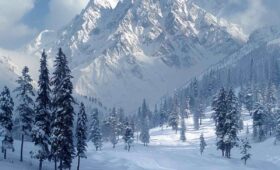
The Gulmarg Gondola is the headline attraction — a two-phase cable car system that carries you from the meadows at 2,650 m to Kongdori (Phase 1) and then to the Apharwat Ridge at around 3,980 m (Phase 2). At the top, the views extend across the Himalayan range into Pakistan-administered Kashmir — vast, silent, and utterly humbling. In winter, the upper slopes are covered in deep powder snow, attracting skiers from across India and increasingly from Europe and Japan.
In summer, the meadow itself transforms into something softer — a wide, gently undulating bowl of green dotted with wildflowers, with golf courses (one of the world’s highest), horse rides, and gentle walks for those who prefer their mountains without ice.
Best for snow: December through February. Best for meadows and photography: May through September.
Pahalgam: The Valley That Heals
The 2025 Pahalgam attack understandably made headlines, and the grief it caused was real and deep. But the valley itself — and the people who call it home — have shown a resilience that is genuinely moving. Tourists are slowly returning to Pahalgam, eager to witness the serene beauty and safety that Kashmir promises, with local businesses from hotel operators to adventure tour guides seeing signs of life as tourist arrivals increase.
Betaab Valley — named after a 1983 Bollywood film shot here — is a lush, riverine meadow surrounded by pine forests and snow peaks that makes you understand instantly why film directors fall in love with Kashmir. Aru Valley, 12 km further up, is even quieter and more untouched, the base camp for several serious treks including the Kolahoi Glacier route.
The Lidder River that flows through Pahalgam offers gentle white-water rafting, pony rides along its banks, and beautiful streamside camping. This is honeymoon country, yes — but it is also the kind of landscape that solo travellers, photographers, and hikers find endlessly rewarding.
Sonamarg: The Meadow of Gold That Opens Ladakh
The name means “meadow of gold” — a reference to the saffron-coloured wildflowers that blanket these slopes in late spring and early summer. But Sonamarg’s real importance on any itinerary is dual: it is a spectacular destination in its own right, and it is the last major stop in Kashmir before the road climbs over Zoji La Pass into Ladakh.
The Thajiwas Glacier, reachable by pony or on foot from the main meadow, offers ice walks and a genuinely close encounter with a Himalayan glacier — accessible without any technical mountaineering skills. River photography here is exceptional: the Sindh River glints silver through the valley, and the light in late afternoon turns everything briefly golden.
Stay overnight if your itinerary allows. The crowds thin dramatically after day-trippers head back to Srinagar, and the silence that settles over the valley in the evening is remarkable.
Gurez Valley: Kashmir’s Best-Kept Secret
If you have done the standard Srinagar–Gulmarg–Pahalgam circuit and want something most tourists never see, Gurez Valley is your answer. Located roughly 85 km north of Srinagar near the Line of Control, Gurez remains beautifully removed from the tourist mainstream.
Wooden Dard-Shin villages perched on steep hillsides, the roaring Kishanganga River, meadows where shepherds still practice transhumance — this is what Kashmir looked like before the age of Instagram. Photography here is extraordinary, the people are exceptionally welcoming, and the sense of discovery is genuine.
Note: Gurez requires an Inner Line Permit for Indian nationals, obtainable in Srinagar with standard ID. Check current access status before planning, as the permit situation can change.
Ladakh: The Roof of the World, Up Close
Arriving in Ladakh — whether by road over Zoji La or by flight into Leh’s dramatic airport, surrounded by arid mountains and prayer flags — is one of travel’s genuinely disorienting, dazzling experiences. Nothing quite prepares you for it.
This is high-altitude desert. The air is thin, the landscape is lunar, the sky at night is so full of stars it seems almost theatrical. And woven through all of it is a Tibetan Buddhist culture of remarkable warmth and depth.
A non-negotiable note on acclimatisation: Leh sits at 3,524 metres. Arriving by flight requires a mandatory 24–48 hours of rest at the same altitude before any strenuous activity. Do not rush this. Acute Mountain Sickness (AMS) is real, can be serious, and no itinerary is worth compromising your health over.
Leh: The Beating Heart of Ladakh
The town of Leh itself is small enough to explore on foot and large enough to keep you busy for two days. The Leh Palace — a nine-storey structure built in the 17th century in the same architectural tradition as the Potala Palace in Lhasa — dominates the skyline and offers sweeping views of the Indus Valley from its upper levels.
Shanti Stupa, a white-domed Buddhist stupa built by Japanese Buddhist monks in 1991, is best visited at sunrise when Leh is still quiet and the mountains turn pink in the morning light. The Leh Main Bazaar is excellent for Ladakhi jewellery, Tibetan singing bowls, hand-woven textiles, and excellent apricot jam (Ladakh produces some of the finest apricots in Asia).
Nubra Valley: Desert Between the Mountains
The road to Nubra Valley crosses Khardung La — commonly claimed to be one of the world’s highest motorable passes at approximately 5,359 metres — before descending into a completely different landscape: a wide, sandy valley ringed by snow peaks, where the Shyok and Nubra rivers meet.
The famous Bactrian (double-humped) camels at Hunder sand dunes are one of Ladakh’s most iconic sights — Central Asian trading route relics in an improbable Himalayan setting. A camel safari at dusk, with the dunes catching the last light and the mountains blue in the background, is one of those travel images that stays with you.
Diskit Monastery, the oldest and largest monastery in Nubra, is stunning — particularly the giant Maitreya Buddha statue that gazes out across the valley with an expression of absolute serenity.
Pangong Lake: Ladakh’s Most Iconic Landscape
No amount of photographs or Bollywood film scenes quite prepares you for Pangong Tso. The lake stretches 134 km, about 60% of it crossing into Chinese-controlled territory. Its colour shifts through the day — turquoise to deep blue to silver — in a way that feels almost intentionally theatrical, as though nature is showing off.
Camping on the lakeshore overnight is one of Ladakh’s essential experiences. The stargazing here, at over 4,350 metres with minimal light pollution, is extraordinary. Bring serious warm layers — even summer nights at Pangong can drop below zero.
Permit required: Both Indian and foreign nationals need permits for Pangong Lake. Arrange through your tour operator in Leh before travelling.
Tso Moriri: For Those Who Want Pangong Without the Crowds
Tso Moriri is the answer for travellers who find Pangong a little busy. This high-altitude lake in the Rupshu region, at 4,522 metres, sits in a wider, emptier landscape with the Himalayan range reflected in absolute clarity. Rare bar-headed geese and Eurasian black-necked cranes breed here. The sole village of Korzok on its shore has a small monastery and basic homestays.
The drive from Leh via the Manali highway is spectacular in itself, passing Tso Kar (another high-altitude lake) en route.
Ladakh’s Monasteries: Where Time Moves Differently
No Ladakh itinerary is complete without meaningful time spent in at least two or three of the valley’s great monasteries. These are not merely tourist attractions — they are living religious communities where monks study, debate, pray, and maintain traditions that stretch back centuries.
Hemis Monastery, the largest and wealthiest gompa in Ladakh, houses an extraordinary collection of thangka paintings, gold statues, and ancient manuscripts. The Hemis Festival (held in summer, usually June/July) features masked Cham dances that are among Himalayan Buddhism’s most spectacular rituals.
Thiksey Monastery, built on a hilltop 19 km from Leh, is architecturally magnificent and contains a 15-metre-tall Maitreya Buddha statue that fills an entire building — a figure of such scale and serenity that standing before it feels briefly overwhelming.
Lamayuru, 127 km west of Leh on the Srinagar highway, sits in an otherworldly moonscape of eroded rock formations and is one of the oldest monasteries in Ladakh. The silence here is deep and entirely welcome.
The Complete 12-Day Itinerary
Here is a realistic, well-paced itinerary covering all three regions. It can be adjusted for shorter trips by removing the Gurez extension or reducing Srinagar days.
Day 01 — Arrival in Jammu Arrive at Jammu Airport or Railway Station. Transfer to hotel. Evening walk through the old city bazaars. Rest and recover from travel.
Day 02 — Vaishno Devi Pilgrimage (Katra) Early morning transfer to Katra (90 minutes from Jammu). Begin yatra — trek or helicopter service to the shrine. Darshan, visit to Bhairon Temple. Overnight stay in Katra.
Day 03 — Jammu to Srinagar via Patnitop Scenic drive through Banihal and the Jawahar Tunnel. Stop at Patnitop for lunch and a short walk through pine forests. Arrive Srinagar by evening. Check into houseboat on Dal Lake.
Day 04 — Srinagar Sightseeing Morning: Shikara ride on Dal Lake, floating market. Afternoon: Mughal Gardens (Shalimar Bagh, Nishat Bagh). Evening: Shankaracharya Temple for sunset views. Overnight on houseboat.
Day 05 — Hazratbal & Old City Morning: Hazratbal Shrine. Afternoon: Old City lanes, Jama Masjid, handicraft shopping. Evening: Lal Chowk for street food and local atmosphere.
Day 06 — Gulmarg Day Trip Full-day excursion to Gulmarg (56 km from Srinagar). Gondola ride (book in advance — queues can be long in peak season). Snow activities in winter, meadow walks in summer. Return to Srinagar.
Day 07 — Srinagar to Pahalgam Drive to Pahalgam (95 km, 2.5–3 hours). Check in. Visit Betaab Valley and Aru Valley in the afternoon. Lidder riverside walk at sunset.
Day 08 — Pahalgam to Sonamarg Morning drive to Sonamarg (80 km). Visit Thajiwas Glacier. Afternoon photography along the Sindh River. Overnight in Sonamarg.
Day 09 — Sonamarg to Leh (via Zoji La) The great mountain crossing. Zoji La Pass, Drass (the second coldest inhabited place on Earth), Kargil, Lamayuru Monastery, Magnetic Hill, and the confluence of the Indus and Zanskar rivers. Arrive Leh in the evening. Rest immediately — acclimatisation is essential.
Day 10 — Leh Acclimatisation & Local Sightseeing Gentle morning walk to Shanti Stupa. Late morning: Leh Palace. Afternoon: Main Bazaar. Light dinner, early night. No strenuous activity.
Day 11 — Nubra Valley Cross Khardung La. Descend to Nubra. Diskit Monastery. Camel safari at Hunder sand dunes at sunset. Overnight camp in Nubra.
Day 12 — Pangong Lake Drive to Pangong Tso via Shyok Valley. Afternoon at the lake. Lakeside camping overnight.
Day 13 — Return to Leh & Departure Morning at Pangong (sunrise photography). Drive back to Leh. Leh Airport transfer for departure flight.
Getting Here: Pickup, Drop & Transport Options
Entry Points
By Air: The primary entry points are Srinagar International Airport (Sheikh ul-Alam International) and Leh’s Kushok Bakula Rimpochee Airport. Both connect to Delhi, Mumbai, and other major Indian cities. Book flights early for peak season (June–August) — Leh in particular books out months in advance.
By Rail: The Jammu–Srinagar Vande Bharat Express, set to launch in April 2026, is expected to dramatically enhance rail access, cutting travel time between the two cities to roughly five hours. The nearest major railheads for Leh remain Jammu and Udhampur.
By Road (Srinagar–Leh Highway): This is one of the great drives of the world and is highly recommended if your schedule permits. The highway crosses Zoji La Pass and is typically open from May through November, subject to weather.
Pickup & Drop Options
- Jammu Airport / Railway Station
- Srinagar International Airport
- Leh Airport (Kushok Bakula Rimpochee)
Most tour operators will arrange airport/station pickup and drop as part of standard packages. Confirm this at booking.
Getting Around Within the Region
- Sedans and SUVs are the standard for Kashmir sightseeing. SUVs are recommended for Ladakh.
- Tempo Travellers work well for groups of 6–10.
- Shared taxis in Leh are economical and run on fixed government rates.
- Motorcycle/bike rentals in Leh are available for experienced riders wanting to explore Ladakh on their own terms — this is one of the world’s great motorcycle journeys. Require a valid driving licence.
SIM card note: Most prepaid SIM cards issued outside Jammu & Kashmir do not work in the region. Purchase a postpaid SIM from Airtel, BSNL, or Jio specifically valid for J&K before travel, or arrange a local SIM on arrival. ATMs are scarce beyond Leh in Ladakh — carry adequate cash.
What Does It Actually Cost? (2026 Estimates)
Costs below are per person estimates for group travel (twin-sharing accommodation). Solo travellers should add 20–30% for single supplements.
| Package Type | Approximate Cost Per Person | What’s Included |
|---|---|---|
| Budget | ₹38,000 – ₹50,000 | Budget guesthouses, basic meals, shared transport |
| Standard | ₹55,000 – ₹80,000 | 3-star hotels/heritage houseboat, breakfast & dinner, private cab |
| Luxury | ₹95,000 – ₹1,80,000+ | Heritage properties, luxury houseboats, premium camps, all meals |
What Is Typically Included
- Hotel / houseboat / camp accommodation
- Private AC transport throughout
- Breakfast and dinner daily
- Pickup and drop at airports/stations
- All sightseeing transfers
What Is Typically Not Included
- Airfare (Delhi–Srinagar/Leh–Delhi can range from ₹4,000–₹15,000 per person, book early)
- Gulmarg Gondola tickets (Phase 1 + Phase 2: approximately ₹900–₹1,500 per person)
- Inner Line Permits / Protected Area Permits (modest fees, arranged through operators)
- Pony rides, shikara rides, camel safaris
- Personal shopping and expenses
- Travel insurance (strongly recommended)
When Should You Go? A Season-by-Season Breakdown
There is no universally “wrong” time to visit this region — but there are clearly better fits depending on what you’re after.
Spring (March–May) Kashmir is at its most romantically beautiful in spring. The famous Tulip Garden in Srinagar blooms in April and is the largest tulip garden in Asia, drawing enormous crowds. Cherry blossoms line the avenues of Srinagar in March. Snow begins retreating from the higher passes, and the Srinagar–Leh highway typically reopens in May. Temperatures are comfortable and the crowds haven’t yet reached peak summer levels.
Summer (June–August) Peak season across the board. Ladakh is fully accessible, meadows in Kashmir are lush and green, and the weather is pleasant across the entire circuit. Expect higher prices, larger crowds, and the need to book accommodation 2–3 months in advance for Leh and houseboat stays.
Autumn (September–October) One of the most underrated times to visit. The summer crowds have thinned, the light is extraordinary — golden and clear — the chinar trees in Kashmir turn amber and red, and the temperatures are still comfortable. Ladakh remains accessible until late October. The Hemis festival (if timing aligns) adds cultural depth.
Winter (November–February) Ladakh is largely closed — the Srinagar–Leh highway shuts down, most camps close, and the high passes are inaccessible. But Gulmarg transforms into one of India’s best ski destinations, and Kashmir in snowfall is breathtakingly beautiful. Jammu’s temples and hill stations are best visited in this season. Winter travel requires good warm clothing and flexibility around weather disruptions.
| Destination | Best Season |
|---|---|
| Jammu (pilgrimage & hill stations) | October–March |
| Srinagar & Kashmir Valley | March–October |
| Gulmarg (skiing) | December–February |
| Gulmarg (meadows & gondola) | May–September |
| Ladakh (Leh, Nubra, Pangong) | May–September |
| Gurez Valley | June–September |
Permits: What You Need and Where to Get Them
Indian Nationals:
- No special permit for Kashmir (Srinagar, Gulmarg, Pahalgam, Sonamarg).
- Inner Line Permit (ILP) required for Nubra Valley, Pangong Lake, and Tso Moriri. As of 2021, ILP fees are modest. Your tour operator will arrange these in Leh — carry two passport photos and a copy of photo ID.
Foreign Nationals:
- Standard Indian visa required.
- Protected Area Permit (PAP) required for most Ladakh areas including Nubra and Pangong. Apply through your tour operator or directly at the DC Office in Leh. Some areas near the Chinese border require additional permits that can take time to process — plan ahead.
- Gurez Valley: Restricted area for foreign nationals; access depends on current policy.
Always check current permit rules with your tour operator before travel — permit requirements and fees can change. Do not rely on information that is more than a few months old.
Packing List: What to Actually Bring
Packing for a Jammu–Kashmir–Ladakh circuit is more complex than most India trips because you are covering three dramatically different climates.
Clothing:
- Thermal base layers (even in summer for Ladakh)
- Mid-layer fleece or down jacket
- Waterproof outer shell
- Sun-protective clothing for Ladakh (UV intensity is very high at altitude)
- Comfortable walking shoes and one pair of warm socks for cold nights
Health & Safety:
- Diamox (acetazolamide) — consult your doctor before travel; many doctors recommend starting 24 hours before ascending to Leh
- Personal first-aid kit
- Altitude sickness information card
- Any personal medications in adequate supply
Electronics:
- Power bank (electricity in remote Ladakh camps can be unreliable)
- Universal adapter
- Offline maps downloaded (Google Maps or Maps.me — mobile data is unreliable in Ladakh)
Documents:
- Valid photo ID (Aadhar, passport, or driving licence)
- Multiple photocopies of all documents
- Emergency contact list in physical form
- Travel insurance documents
Cash:
- Carry sufficient cash (INR) before leaving Leh — ATMs in Nubra and at Pangong Lake are non-functional or frequently out of service.
10 Insider Tips That Most Travel Guides Won’t Tell You
01. Book the Gulmarg Gondola in advance. In peak season, same-day tickets can mean a 3–4 hour wait. Many operators allow advance booking online.
02. The best shikara rides are before 7 AM. The floating vegetable market is at its most atmospheric in the early morning. Ask your houseboat to arrange it.
03. Leh’s restaurants are genuinely excellent. The city has a surprisingly cosmopolitan food scene — try thukpa (Tibetan noodle soup), momos, and butter tea, but also seek out the Korean and Italian restaurants that have sprung up to serve the international trekking crowd.
04. Carry trekking poles for Vaishno Devi. The descent from the shrine is hard on the knees and many first-timers underestimate it.
05. Stay two nights in Sonamarg if you can. Most itineraries make it a single-night stop, but the valley rewards an early morning walk that most day-trippers never see.
06. The drive from Leh to Pangong is as spectacular as the lake. Allow yourself to stop frequently — the Shyok Valley section especially offers views that deserve more than a car window glance.
07. Negotiate shikara prices on the second day, not the first. Every houseboat will offer their “cousin” or “brother” for a shikara ride. Prices are negotiable and the standard tourist rate is usually 30–40% above what locals pay.
08. Ladakh’s best monasteries are visited before 9 AM or after 4 PM. Midday brings the tour buses. Morning and late afternoon offer the monks at prayer and the light at its most beautiful.
09. Winter Kashmir is underrated. Srinagar under snow — crossing the lake in a shikara past ice-edged willows — is one of the most surreal and beautiful travel images in India.
10. Respect the religious spaces. Remove shoes at temples, cover your head at dargahs, seek permission before photographing monks or ceremonies. The warmth Kashmir and Ladakh show travellers is, in large part, a response to the respect visitors extend.
Frequently Asked Questions
Is Kashmir safe for tourists in 2026? For domestic Indian tourists, the main circuits (Srinagar, Gulmarg, Pahalgam, Sonamarg) are operational and accessible with enhanced security. Baisaran Meadows near Pahalgam, site of the 2025 attack, remains closed. Foreign nationals should carefully check their government’s current travel advisory — most Western governments currently advise against travel to the J&K valley. Ladakh carries a better safety classification and is recommended for international travellers.
How many days do I need for a complete Jammu–Kashmir–Ladakh trip? A 10–12 day trip covers the highlights comfortably. If you want to include Gurez Valley, Tso Moriri, or a serious trek, add 3–4 more days. A Kashmir-only trip (Srinagar, Gulmarg, Pahalgam) can be done in 5–6 days.
Do I need an Inner Line Permit for Ladakh? Indian nationals need ILP for specific areas — Nubra Valley, Pangong Lake, Tso Moriri. Your tour operator arranges this in Leh. Foreign nationals require a Protected Area Permit, which has a slightly more involved application process.
What is the best month to visit Ladakh? June to September is the consensus best period — all roads are open, weather is clear, and the landscape is at its most accessible. July brings occasional rain but also spectacular greenery in the valleys. September has the best light for photography.
Can families with children travel to Ladakh? Yes, many families make the trip successfully. Key considerations: children should acclimatise at the same pace as adults (no rushing), carry appropriate altitude medication if advised by your paediatrician, and ensure your itinerary includes proper rest days. Most children handle Ladakh well if the ascent is gradual.
Is the Srinagar–Leh road trip better than flying? If time permits, absolutely do the road trip — at least in one direction. The Zoji La crossing, the Drass valley, the Kargil landscape, and the final approach to Leh via the Indus Valley are among the most spectacular drives on the planet. Fly one way if you’re short on time.
What is the cheapest way to do this trip? Budget travel — shared taxis, government dak bungalows and basic guesthouses, cooking your own meals where facilities allow — can bring costs down significantly. Backpacker infrastructure is well established in both Srinagar and Leh. The Srinagar–Leh road trip by shared taxi is a classic budget option.
Final Word: Why This Journey Is Worth It
Kashmir and Ladakh are not always easy destinations. The altitude demands respect. The distances are real. The political complexities are present. And some of the most beautiful places are the most remote.
But that is precisely why this journey matters.
In an era when travel has become increasingly commodified — the same boutique hotel aesthetic replicated across continents, the same Instagram viewpoints photographed from the same angle — the Jammu–Kashmir–Ladakh circuit offers something rarer. It offers landscapes that are genuinely unlike anywhere else. Culture that has its own deep roots and grammar. A hospitality that comes not from training manuals but from genuine warmth.
Tourism contributes nearly 7 per cent to the Gross State Domestic Product of Jammu and Kashmir and supports thousands of families in the hospitality, transport, and handicraft sectors. When you travel here thoughtfully — staying with local operators, buying from local artisans, treating the region’s religious and cultural sites with real respect — your visit is more than a holiday. It is a small act of solidarity with people who have endured more than their share of difficulty and who continue, with remarkable dignity, to welcome strangers into the most beautiful place they know.
Go carefully. Go curiously. Go with an open heart.
The mountains will take care of the rest.
Last updated: May 2026. All travel information, safety advisories, and permit requirements should be verified against current government sources before departure. The J&K Tourism helpline is available 24/7 at 8899941010 / 8899931010.
jammu kashmir ladakh, kashmir travel guide 2026, ladakh trip planner, best places to visit in kashmir, leh ladakh itinerary, gulmarg skiing, pangong lake camping, dal lake houseboat, vaishno devi pilgrimage, kashmir tour cost, kashmir safety 2026, sonamarg glacier, nubra valley camel safari, pahalgam betaab valley, srinagar mughal gardens