36 Hours in Srinagar: The First-Timer’s Guide to Kashmir’s Capital
By: JKL Travels – Kashmir Travels | August 2026
How to See the Best of Kashmir’s Capital Without Rushing
There is a particular moment in Srinagar when the city seems to slow down.
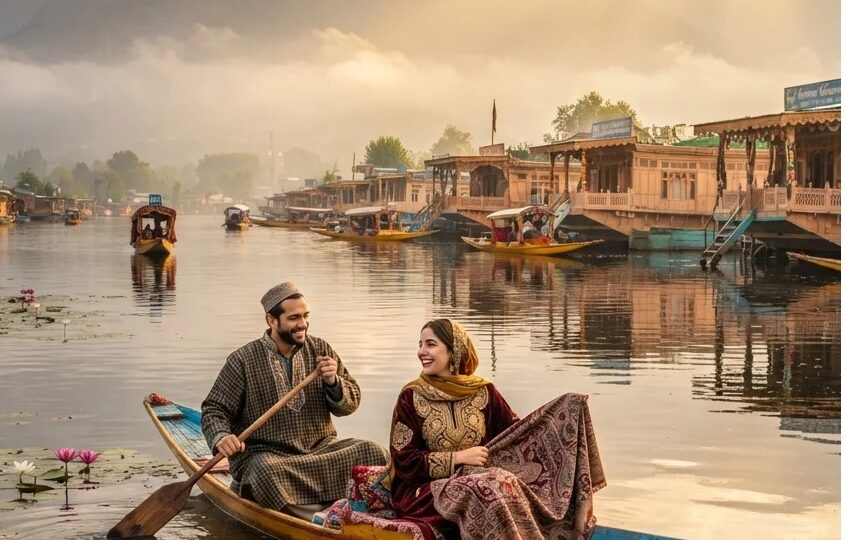
It happens just before sunrise on Dal Lake, when the first shikaras glide through still water and vegetable sellers paddle quietly towards the floating market. Later, the city wakes to the sound of traffic, shop shutters and calls to prayer. By afternoon, the Mughal gardens offer a very different rhythm — fountains, chinar trees and mountain views — before evening draws you towards the old city and its centuries-old wooden architecture.
If you have only 36 hours in Srinagar, the temptation is to squeeze in everything. Resist it.
Srinagar rewards travellers who leave some space between the sights.
This compact itinerary is designed for a first-time visitor who wants to experience the city’s essential mix of Dal Lake, Mughal heritage, Old Srinagar, religious landmarks, Kashmiri food and sunset views without spending the entire trip inside a vehicle.
And there is an important correction to make at the outset: a few commonly repeated claims about Srinagar’s attractions and food culture need more nuance. The famous “36-course Wazwan”, for example, is real as a ceremonial ideal, but most visitors eating Wazwan in a Srinagar restaurant will not be served 36 courses. Likewise, the Jamia Masjid is more than six centuries old in origin, but the building has been rebuilt and repaired repeatedly over the centuries.
That distinction makes the experience more interesting, not less.
Your 36-Hour Srinagar Itinerary at a Glance
| Time | Experience | Why it matters |
|---|---|---|
| Day 1, 5:00 PM | Jamia Masjid | Historic Old City architecture |
| Day 1, 6:30–7:00 PM | Khanqah-e-Moula | Sufi heritage and traditional Kashmiri woodwork |
| Day 1, 8:00 PM | Old City dinner/walk | Local atmosphere |
| Day 2, 5:00–7:00 AM | Dal Lake & floating market | Srinagar at its most atmospheric |
| Day 2, 8:00 AM | Breakfast/Kahwa | Slow start after an early morning |
| Day 2, 9:30 AM | Nishat Bagh | Mughal garden and Dal Lake views |
| Day 2, 11:00 AM | Shalimar Bagh | Imperial Mughal landscape |
| Day 2, 12:30 PM | Chashme Shahi | Spring, terraces and mountain setting |
| Day 2, 1:30 PM | Shankaracharya Hill | Panoramic Srinagar views |
| Day 2, 3:30 PM | Hazratbal | Spiritual and architectural landmark |
| Day 2, 5:00 PM | Lal Chowk/craft shopping | Contemporary city and local crafts |
| Day 2, 6:00–7:30 PM | Pari Mahal | Sunset and Zabarwan views |
| Day 2, 8:00 PM | Wazwan dinner | The perfect culinary finale |
Important: Treat these timings as a practical framework rather than fixed guarantees. Prayer schedules, traffic, weather, security arrangements and monument opening hours can change.
Day 1: Begin Where Srinagar’s Story Runs Deep
5 PM — Jamia Masjid: Enter Old Srinagar Through Its Grand Courtyard
Start your Srinagar experience in Nowhatta, in the heart of the Old City.
The Jamia Masjid is one of Srinagar’s defining landmarks, and its scale can surprise first-time visitors. The mosque was commissioned under Sultan Sikandar around the beginning of the 15th century and is famous for its 378 wooden deodar pillars. The architecture combines Islamic, Persian and distinctly Kashmiri traditions.
The number is worth remembering: 378.
But the more important detail is what those pillars tell you about Kashmir’s architectural vocabulary. Timber was not merely decorative. It was an essential part of traditional construction in a region where earthquakes, snow and harsh winters influenced building techniques.
The mosque has been damaged and rebuilt several times, so describing today’s structure simply as a “600-year-old building” can be misleading. Its historical lineage is more than six centuries old; the physical structure has evolved through successive periods of reconstruction.
The Directorate of Tourism Kashmir identifies the mosque as dating to the early 1400s and notes its 378 deodar pillars.
What to look for
Don’t rush through the courtyard.
Look up at the timber framework. Notice the pyramidal forms of the roof and the relationship between the wooden structure and the brick walls. The design is both monumental and remarkably restrained.
The courtyard also creates an almost cinematic contrast with the lanes outside.
One moment you are surrounded by Old Srinagar traffic and market noise; the next, the atmosphere becomes quiet and spacious.
Travel tip
Dress modestly and remember that this is an active place of worship, not simply a tourist attraction. Access can be affected by prayer times and local circumstances.
7 PM — Khanqah-e-Moula: A Masterclass in Kashmiri Wood Architecture
From Nowhatta, continue towards Zaina Kadal, beside the Jhelum.
Here stands Khanqah-e-Moula, also known as the Shah-e-Hamadan shrine.
This is where Srinagar’s religious history and architectural history become inseparable.
The shrine is associated with Mir Sayyid Ali Hamadani, the Persian Sufi scholar and preacher better known in Kashmir as Shah-e-Hamadan. The original khanqah dates back to the 14th century, although the structure has suffered fires and undergone repeated rebuilding.
What makes the building particularly memorable is its traditional timber construction.
The Directorate of Tourism Kashmir describes it as being constructed from deodar wood using the traditional Kashmiri Taq system, with interlocking wooden beams and no conventional nail-based construction.
This is one of those places where arriving near twilight makes sense. The wood, painted details and intricate decoration take on a warmer character as daylight fades.
A correction worth knowing
Calling Khanqah-e-Moula simply “one of Kashmir’s oldest Sufi shrines” is broadly understandable, but the history is more complicated than a single foundation date suggests.
The shrine has been damaged by fires and rebuilt multiple times. Its significance comes not only from its age but from its continuing place in Kashmir’s religious and cultural history.
Day 2: Wake Before the City
5 AM — Dal Lake at Sunrise
If you do only one early morning activity in Srinagar, make it this.
Wake before sunrise.
A shikara on Dal Lake at dawn feels completely different from the lake you see during the busy daytime. The water is quieter, the mountains are reflected more clearly, and the working side of the lake becomes visible.
The Dal Lake is not simply a scenic backdrop for tourists. It supports fishing, water-plant harvesting, floating gardens and other livelihoods. The Srinagar district administration describes the lake as covering around 18 square kilometres, with floating gardens forming part of the wider wetland system.
Go beyond the postcard view
Ask your boatman to take you towards the floating vegetable market.
The market operates in the early morning, when growers and traders arrive in wooden boats carrying produce harvested from floating gardens and nearby areas.
Recent reporting and photographs from July 2026 show that this remains an active working market rather than a historical re-enactment for tourists.
That distinction matters.
You are not simply watching a tourist show. You are seeing part of Srinagar’s living lake economy.
Travel sources commonly place the market’s busiest period around 5:30–7:30 AM, with activity tapering off after that.
How long should the shikara ride take?
Allow roughly 90 minutes to two hours if the floating market is part of your plan.
A basic ride can be shorter, but the early-morning market requires you to start well before most tourists have had breakfast.
Current published prices vary substantially depending on duration, route, boat and negotiation. Recent 2026 travel pricing puts shikara experiences broadly in the ₹600–₹3,000+ range, while shorter market-oriented rides may be quoted differently.
Best practice: agree on the duration and total price before leaving the ghat.
8 AM — Kashmiri Breakfast and Kahwa
After getting off the shikara, don’t immediately race towards the next monument.
Have breakfast.
Try Kahwa, the traditional Kashmiri green tea often flavoured with saffron, cardamom and cinnamon, and look for local breads such as girda or lavasa.
This is also the point where a 36-hour trip can become unnecessarily exhausting.
You have already been awake since before sunrise.
Slow down for an hour.
9:30 AM — Nishat Bagh: The Mughal Garden With a View
If Srinagar had a visual signature, Nishat Bagh would have a strong claim to it.
Built in 1633 by Asif Khan, brother of Nur Jahan, Nishat Bagh stretches along the eastern side of Dal Lake, with the Zabarwan mountains rising behind it. The garden’s terraced structure creates a natural progression from the lake towards the hillside.
The Srinagar district administration describes Nishat as the second-largest Mughal garden in Kashmir, with twelve terraces traditionally associated with the zodiac.
This is not merely a flower garden.
It is landscape architecture designed around water, perspective and hierarchy.
Walk upwards rather than simply photographing the lower terrace. The higher you go, the more the geometry of the garden reveals itself — water channels in the centre, trees framing the view and Dal Lake opening behind you.
Best photo opportunity
Stand high enough to frame:
Chinar trees + terraces + Dal Lake + Zabarwan mountains.
That combination is essentially Srinagar in one photograph.
11 AM — Shalimar Bagh: The Emperor’s Garden
Continue to Shalimar Bagh.
Jahangir commissioned the garden in 1619, traditionally associated with his wife Nur Jahan. It was later expanded during Shah Jahan’s reign. The garden became part of the Mughal court’s summer landscape in Kashmir.
Its famous terraces, water channels, pavilions and chinar trees reveal how the Mughals transformed the natural landscape into a controlled expression of power and pleasure.
The garden is also a useful reminder that Kashmir’s tourism history is centuries older than modern hotels and package tours.
For the Mughals, Kashmir was not simply a destination.
It was a seasonal royal retreat.
How much time?
Give Shalimar around 60–75 minutes.
If you are a serious architecture or garden enthusiast, stay longer.
If you are travelling with children or older family members, avoid turning the visit into a race through every terrace.
12:30 PM — Chashme Shahi
Next comes the smallest of Srinagar’s three celebrated Mughal gardens.
Chashme Shahi was developed in 1632 around a natural spring by Ali Mardan Khan under Shah Jahan’s patronage and was associated with Prince Dara Shikoh.
Its appeal is different from Nishat and Shalimar.
It feels more intimate.
The garden rises through compact terraces, with water flowing down through channels, pools and cascades.
The official Srinagar district tourism page notes that Chashme Shahi generally remains open to visitors from March to November, with April to October considered particularly favourable.
1:30 PM — Shankaracharya Hill
This is the itinerary’s one major climb.
The Shankaracharya Temple sits high above Srinagar and provides one of the city’s most dramatic viewpoints.
The temple is reached via 243 steps, according to Incredible India.
That number sounds manageable.
In the midday heat, it feels less so.
If you are visiting during summer, carry water and avoid treating the climb as a speed test.
From above, Srinagar opens in layers: Dal Lake below, the city spreading outward and the mountains forming the wider frame.
Practical note
Security and access procedures can apply at the hill and temple complex, and photography restrictions may be imposed. Check locally on the day of your visit.
3:30 PM — Hazratbal Shrine
From one hilltop landmark, move towards the northern side of Dal Lake and Hazratbal.
The white marble shrine is one of Kashmir’s most revered Muslim religious sites and is associated with the Moi-e-Muqqadas, a relic believed by devotees to be a hair of Prophet Muhammad.
Incredible India describes Hazratbal as a major centre of Muslim devotion and identifies the relic as the core of its religious significance.
For visitors, the experience is as much about atmosphere as architecture.
The shrine sits beside Dal Lake, creating a striking visual combination of white marble, water and mountains.
Be respectful
Hazratbal is an active religious site.
Dress appropriately, follow local instructions, and do not assume that every part of the complex is accessible to tourists.
On special religious occasions, the atmosphere can be considerably more crowded.
5 PM — Lal Chowk and Srinagar’s Craft Culture
After a day of monuments, return towards central Srinagar.
Lal Chowk is less about one particular monument and more about understanding the city’s commercial personality.
Explore local shops and, where possible, seek out genuine Kashmiri handicrafts rather than mass-produced souvenirs marketed as “Kashmiri.”
Look for:
- Papier-mâché
- Walnut wood carving
- Kashmiri carpets
- Pashmina
- Hand embroidery
- Copperware
- Traditional textiles
A smart shopping rule
If you are buying expensive Pashmina or carpets, don’t rely solely on verbal claims.
Ask for documentation, understand the material, compare prices and avoid pressure tactics.
A beautiful souvenir should still be a transparent purchase.
6 PM — Pari Mahal for the Finale
End your sightseeing at Pari Mahal.
The name translates roughly as Palace of Fairies, and the location explains why the nickname survived.
The seven-terraced garden sits high on the Zabarwan range overlooking Srinagar and Dal Lake. The Srinagar district administration says it was developed by Mughal prince Dara Shikoh in the mid-17th century and was used as a library and later associated with astronomical and astrological study.
The site is also conveniently close to Chashme Shahi.
The official Incredible India listing currently gives Pari Mahal visiting hours as 9:30 AM to 7:30 PM, although travellers should verify same-day access before planning a sunset visit.
Why finish here?
Because the view changes as the light disappears.
First you see Dal Lake.
Then the city begins to sparkle.
Then the Zabarwan mountains turn into silhouettes.
It is a far more satisfying ending than simply returning to the hotel.
8 PM — Wazwan: The Meal Everyone Talks About
Now for the grand finale.
Kashmiri Wazwan is not simply a list of meat dishes.
It is a culinary tradition, a communal ritual and an expression of hospitality.
The waza, or traditional chef, is central to the preparation. A full ceremonial Wazwan involves numerous preparations served in a prescribed sequence, traditionally around a communal copper platter known as a traam/trami.
But here is where many travel guides oversimplify things.
Is Wazwan really a 36-course meal?
Yes — but not necessarily in the way tourists imagine.
A full ceremonial Wazwan can reach 36 courses, but that does not mean a Srinagar restaurant automatically serves 36 dishes to every visitor.
Recent 2026 reporting on restaurant experiences suggests that visitors are more commonly served a shorter selection, while full multi-course Wazwan is more closely associated with weddings, large celebrations and specially arranged meals.
So don’t judge the authenticity of your dinner simply by counting plates.
Dishes worth trying
A first-time visitor should look for:
- Rogan Josh
- Rista
- Gushtaba
- Tabak Maaz
- Methi Maaz
- Daniwal Korma
- Yakhni
- Aab Gosht
Gushtaba is traditionally associated with the closing stage of the feast and is one of the dishes that newcomers often remember most.
Where should you eat?
Ahdoos is a well-known option for Kashmiri cuisine and Wazwan-style dishes. Current online listings show substantial variation in individual dish prices, while recent local travel reporting places its Wazwan offerings around the ₹700–₹1,250 range depending on format.
For a couple or solo traveller who does not want a large communal platter, ordering individual dishes can actually make more sense.
For a genuine full ceremonial experience, arrange it in advance with a reputable restaurant, hotel, houseboat or traditional Waza rather than assuming you can walk in and receive a 36-course feast.
What Does 36 Hours in Srinagar Cost?
Your biggest variables will be accommodation, vehicle hire and the type of food and shikara experience you choose.
Indicative budget for two adults
| Expense | Budget | Comfortable |
| Hotel for 1 night | ₹2,500–₹4,000 | ₹5,000–₹8,000 |
| Local transport/cab | ₹2,000–₹3,500 | ₹3,500–₹5,000 |
| Shikara | ₹800–₹1,500 | ₹1,200–₹2,500 |
| Food | ₹1,500–₹2,500 | ₹3,000–₹5,000 |
| Wazwan dinner | ₹700–₹2,500+ | ₹1,500–₹4,000+ |
| Entry/incidentals | ₹500–₹1,000 | ₹1,000–₹1,500 |
| Approx. total | ₹8,000–₹13,000 | ₹14,000–₹26,000+ |
These are planning estimates, not fixed package prices. Seasonal demand, hotel category, vehicle type, restaurant choice, negotiated shikara duration and special events can push the total higher.
Current accommodation guides put many mid-range Srinagar hotels roughly in the ₹2,500–₹7,000 per night bracket, with premium lake-view properties considerably higher.
How to save money
If budget matters:
- Stay slightly away from premium Dal Lake properties.
- Use a local cab for a full sightseeing circuit rather than booking separate point-to-point rides.
- Agree on the shikara price before boarding.
- Eat Wazwan dishes individually instead of ordering a large ceremonial platter.
- Visit the Mughal gardens in one continuous route.
Best Time to Spend 36 Hours in Srinagar
April to June: Flowers, gardens and comfortable sightseeing
Spring is one of Srinagar’s most photogenic seasons.
The Mughal gardens come alive, temperatures are generally comfortable for sightseeing and the wider Kashmir Valley begins its high-season rhythm.
The famous tulip season is an added attraction when the timing aligns with the annual bloom.
July to August: Green Kashmir and lotus season
The Dal Lake’s floating gardens and lotus growth can be particularly attractive during summer.
The Srinagar district administration notes that lotus flowers bloom in the lake’s floating gardens around July and August.
The trade-off is that weather can be changeable, and August can bring heavier rainfall.
September to November: The chinar season
For photographers, this may be the sweet spot.
The gardens begin taking on golden and copper tones, and Srinagar’s chinar-lined landscapes become particularly atmospheric.
December to February: Winter
Winter changes the personality of Srinagar.
The city can become cold and misty, while snow experiences are better pursued in destinations such as Gulmarg rather than expecting Srinagar itself to look like a permanent snow globe.
A Better Way to Plan This 36-Hour Trip
The biggest mistake is trying to add Gulmarg, Pahalgam or Sonamarg to the same 36-hour Srinagar itinerary.
Don’t.
Those are separate experiences.
If your trip is genuinely limited to 36 hours, stay within Srinagar and explore the city properly.
You will see more and spend less time stuck in traffic.
Also remember that road conditions can change quickly in Kashmir. Recent August 2026 traffic advisories have warned of regulated movement and delays on stretches of the Srinagar-Jammu National Highway because of road conditions and weather.
That matters even if Srinagar itself is your destination, particularly if your arrival or departure involves a long road journey.
What to Pack for a Short Srinagar Trip
Keep it practical.
Essentials
- Comfortable walking shoes
- Light layers
- A rainproof outer layer
- Sunglasses
- Sunscreen
- Reusable water bottle
- Small backpack
- Power bank
- Modest clothing for religious sites
- Some cash for small purchases and local transport
If travelling in winter, replace the light layers with proper thermal clothing.
36 Hours in Srinagar: Frequently Asked Questions
Is 36 hours enough for Srinagar?
Yes, for the highlights.
You can experience Dal Lake, the Old City, Mughal gardens, Hazratbal, Pari Mahal and Kashmiri cuisine in roughly a day and a half.
It is not enough to understand all of Kashmir — but it is enough to get a meaningful introduction to Srinagar.
What is the best thing to do in Srinagar for a first-time visitor?
A sunrise shikara ride on Dal Lake is arguably the strongest first experience, especially if you combine it with the early floating vegetable market.
What time should I take a shikara to see the floating market?
Aim to be on the lake around sunrise. Published travel information places the market’s active period roughly around 5:30–7:30 AM, although exact activity varies by day and season.
How much does a shikara ride cost in Srinagar?
There is no single universal price for every route and duration. Current 2026 travel listings show prices ranging from roughly ₹600 for shorter experiences to ₹3,000 or more for longer/private rides.
Always confirm the total cost and duration before boarding.
Is Srinagar Wazwan really 36 courses?
A full ceremonial Wazwan can reach 36 courses, but most restaurant experiences offered to tourists are shorter.
Think of 36 as the traditional ceremonial maximum rather than a guaranteed restaurant menu.
Which Wazwan dishes should I try first?
Start with Rogan Josh, Rista, Tabak Maaz and Gushtaba.
If you enjoy Kashmiri cuisine, expand from there.
Can I visit the Mughal gardens in one morning?
Yes.
Nishat, Shalimar and Chashme Shahi can be combined, particularly if you begin early.
However, don’t underestimate traffic and walking time.
Which Mughal garden is the best?
For panoramic views, Nishat is difficult to beat.
For imperial history and grand landscaping, Shalimar stands out.
For a smaller, more intimate experience centred around a spring, choose Chashme Shahi.
If time permits, visit all three.
Is Pari Mahal worth visiting?
Absolutely — particularly if you can reach it towards late afternoon.
The terraced garden and elevated position offer sweeping views over Srinagar and Dal Lake. The official Srinagar administration identifies it as a seven-terraced garden developed under Dara Shikoh in the 17th century.
Is Srinagar safe for tourists?
Travel conditions can change, so visitors should check current official advisories, local traffic notices and hotel updates immediately before travelling.
Do not assume that an itinerary published months earlier reflects conditions on the day you arrive.
The Final Word: Don’t Try to “Complete” Srinagar
A 36-hour trip to Srinagar works best when you stop thinking of it as a checklist.
Yes, see Dal Lake.
Yes, climb towards Shankaracharya.
Yes, walk through a Mughal garden.
Yes, stand beneath the wooden roof of Jamia Masjid and admire the craftsmanship.
But leave room for the unexpected.
A cup of Kahwa that turns into an hour-long conversation. A quiet lane beside the Jhelum. A shikara route that takes you away from the busiest tourist stretch. The smell of wood smoke in the Old City. The first lights appearing around Dal Lake from Pari Mahal.
Those moments are not really on the itinerary.
They are the reason the itinerary works.
If you have only 36 hours, don’t try to see all of Kashmir. See Srinagar properly.